Veteran pro-democracy activist and General Secretary of the National Democratic Coalition, Chief Ayo Opadokun, has warned Nigerians against expecting President Bola Tinubu to reverse decades of systemic misrule within a single four-year term, arguing that the country’s current crises are rooted in nearly six decades of military domination and its lingering civilian offshoots.
Speaking at the public presentation of his new book, titled The Gun Hegemony, at the MUSON Centre in Onikan, Lagos, Opadokun traced what he described as Nigeria’s “arrested development” to the central role of the military in politics and governance since the mid-1960s.
The event drew a high-powered audience from politics, diplomacy, the media, academia and traditional institutions. President Bola Tinubu was represented by his Chief of Staff, Femi Gbajabiamila. Lagos State Governor Babajide Sanwo-Olu was represented by the state Attorney-General, Lawal Pedro. Also present were former Commonwealth Secretary-General, Chief Emeka Anyaoku; Publisher of Vanguard newspapers, Sam Amuka-Pemu; and representatives of traditional rulers, including the Owa Obokun of Ijesha land, Oba Adesuyi Haastrup, represented by his wife, Victoria.
Opadokun used the platform to situate Nigeria’s present economic hardship, insecurity and institutional decay within what he called a 57-year continuum of misgovernance dominated by the “gun hegemony” – the ascendancy of the military and its protégés over the country’s political life.
According to him, the military first seized power in 1966 and ruled directly for 13 years until 1979, then returned in 1983 and stayed for another 16 years until 1999. “That makes 29 years in uniform,” he said. “When we forced them back to the barracks, they imposed their former Commanders-in-Chief on us again in the name of Olusegun Obasanjo and Muhammadu Buhari. That is another 16 years, making a total of 44 years.”
He argued that when the civilian administrations of Shehu Shagari, Umaru Musa Yar’Adua and Goodluck Jonathan are added to this tally, Nigeria has effectively been governed by the same political and institutional tendency for about 57 of its years as an independent state. “If you add the years of Yar’Adua and Jonathan, along with that of Shagari, that is about 13 years. So, you have a total of 57 years out of 66 years of independence,” he said, stressing that such long dominance entrenched a particular mindset and network across the state.
“Some people don’t have the broadmindedness to appreciate the fact that when people rule for such a long period, they are entrenched in all the corporate institutions. Their minions, surrogates, loyalists and sympathisers remain in charge,” Opadokun noted. In his view, this entrenched order continues to shape policy, security, the economy and the judiciary, regardless of which party or personality occupies the presidency.
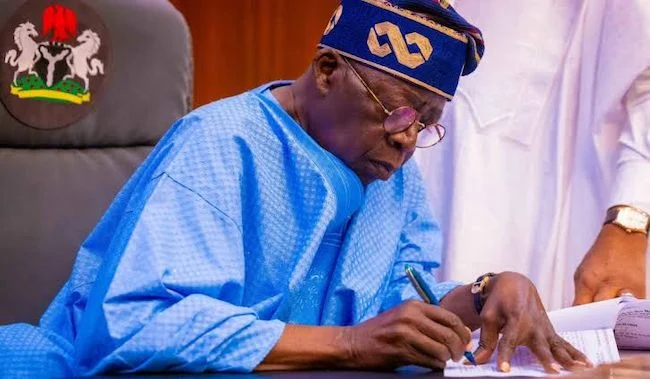
Against this backdrop, he dismissed what he described as a growing tendency to heap all of Nigeria’s current woes on President Tinubu. “Some people, for reasons best known to them, either deliberately or feigning ignorance, blame Bola Tinubu for everything in the world,” he said. While acknowledging that citizens are justifiably frustrated by hardship and insecurity, he insisted that no leader could reasonably be expected to undo nearly six decades of structural damage in three years.
On Tinubu’s economic reforms, Opadokun particularly defended the administration’s tax initiatives, which have attracted criticism from labour unions and sections of the business community. He argued that the reforms are an attempt to correct longstanding distortions in Nigeria’s fiscal system and move the country closer to genuine fiscal federalism.
He recalled telling guests at a Christmas carol service in his Offa residence that the four tax bills proposed by the Tinubu administration were designed to ensure that those who earn the most contribute their fair share. “Whether people like it or not, it will succeed,” he said. “Only public servants who earn little money pay tax in Nigeria, while those making the money dodge and bribe revenue officers. He has tried to right that wrong, and some people don’t like it.”
Opadokun also addressed the worsening security situation, including banditry, terrorism and kidnapping, which has fuelled public anger and fear. He conceded that “the current situation is unwarranted and shows that our security architecture is unfit for now,” but urged Nigerians to consider both domestic and regional dynamics, especially instability in the Sahel.
“Look at the Sahel region; they are looking for a way to get into Nigeria. This country has been misgoverned for too long; it will not take three years for it to be righted,” he said, reiterating that the roots of insecurity lie in decades of poor governance, weak institutions and the militarisation of politics.
In The Gun Hegemony, Opadokun revisits the January 15, 1966 coup and its aftermath, raising pointed questions about the role of the military and the decisions taken by the then Head of State, Major General Johnson Aguiyi-Ironsi. At the launch, he queried the ethnic and regional imbalance in the army at the time and criticised the failure to promptly try the coup plotters.
“Why did Gen. Aguiyi-Ironsi wait for six months without convening the appropriate military bodies to decide the fate of the coup plotters? Why did he insist on the promulgation of Decree 34 of 1966 despite advice to the contrary?” he asked. Decree 34, which sought to abolish the federal structure in favour of a unitary system, remains one of the most controversial decisions in Nigeria’s constitutional history and, in Opadokun’s view, a key turning point in the centralisation of power.
He argued that the dominance of the “gun” in Nigeria’s political history has stunted the country’s growth and distorted its federal character. “If the army did not intervene in Nigeria’s affairs, the story of Nigeria would not be what it is today,” he said, challenging scholars and policymakers to confront the long-term consequences of military dictatorship on the nation’s political culture and institutions.
President Tinubu, in his remarks delivered by Gbajabiamila, praised Opadokun’s patriotism and long-standing commitment to the struggle for democracy. He commended the author for “interrogating history” and said the book would help Nigerians better understand the roles played by past leaders and activists, while guiding future decision-making.
Governor Sanwo-Olu, through his representative, described Opadokun as a symbol of perseverance whose sacrifices for democracy remain underappreciated. He said the book underscored the need to remember the cost of freedom and to guard against any return to authoritarian rule.
Chief Emeka Anyaoku, drawing on his experience as a diplomat and elder statesman, echoed Opadokun’s central thesis that military intervention derailed Nigeria’s early promise. “Nigeria, before the intervention of the military, was a progressive country. The premiers of the regions were developing their areas with regional resources,” he said.
He cited the late Sardauna of Sokoto, Ahmadu Bello, who developed the Northern Region with revenue from groundnut, hides and skin, and tin; Chief Obafemi Awolowo, who transformed the Western Region through cocoa proceeds and established Africa’s first television station; Dr Michael Okpara, who drove development in the Eastern Region with palm produce; and Dennis Osadebey, who advanced the Mid-West Region with rubber revenue. “All that story changed when the military intervened in politics and governance,” Anyaoku lamented.