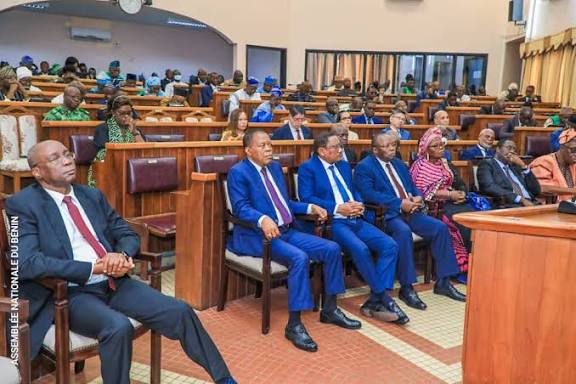
Benin’s ruling camp has secured complete control of the National Assembly after parliamentary elections in which government-aligned parties won every one of the 109 seats, shutting the door on the country’s main opposition force. The outcome has intensified concerns among political observers and civil society groups about the state of pluralism and democratic competition in a country once hailed as a model of democracy in West Africa.
The vote was held to renew Benin’s unicameral National Assembly, a key institution in the country’s semi-presidential system. Two parties allied with the presidency, the Union for Progress and Renewal (Union progressiste le Renouveau, UP-R) and the Republican Bloc (Bloc Républicain, BR), emerged as the only winners. According to the official results, UP-R captured 60 seats and BR 49, giving the pro-government bloc a clean sweep of the legislature.
The main opposition party, known as The Democrats, had entered the race under intense scrutiny. It was the only significant opposition formation allowed to field candidates in the parliamentary contest, after years in which new electoral rules and administrative hurdles had effectively sidelined or disqualified rival parties. Despite this rare opening, The Democrats failed to clear a crucial legal threshold: a requirement that parties obtain at least 20 percent of the vote in each electoral district in order to be allocated seats in parliament.
This nationwide 20 percent benchmark, introduced as part of a package of electoral reforms, has been heavily criticized by opposition leaders and some legal experts. They argue that it disproportionately favors large, well-established parties and can translate relatively modest differences in vote share into dramatic disparities in representation. In this case, it meant that even though The Democrats attracted support in several areas, they were left with no representation at all in the National Assembly.
The same electoral cycle also included local and municipal elections, held concurrently with the parliamentary vote. In those contests, the opposition’s space was even more restricted. The Democrats were not permitted to run and did not field any candidates, leaving local councils and mayoralties overwhelmingly in the hands of pro-government parties and their allies. This consolidation of power at both national and local levels further reduces institutional platforms from which dissenting voices might emerge.