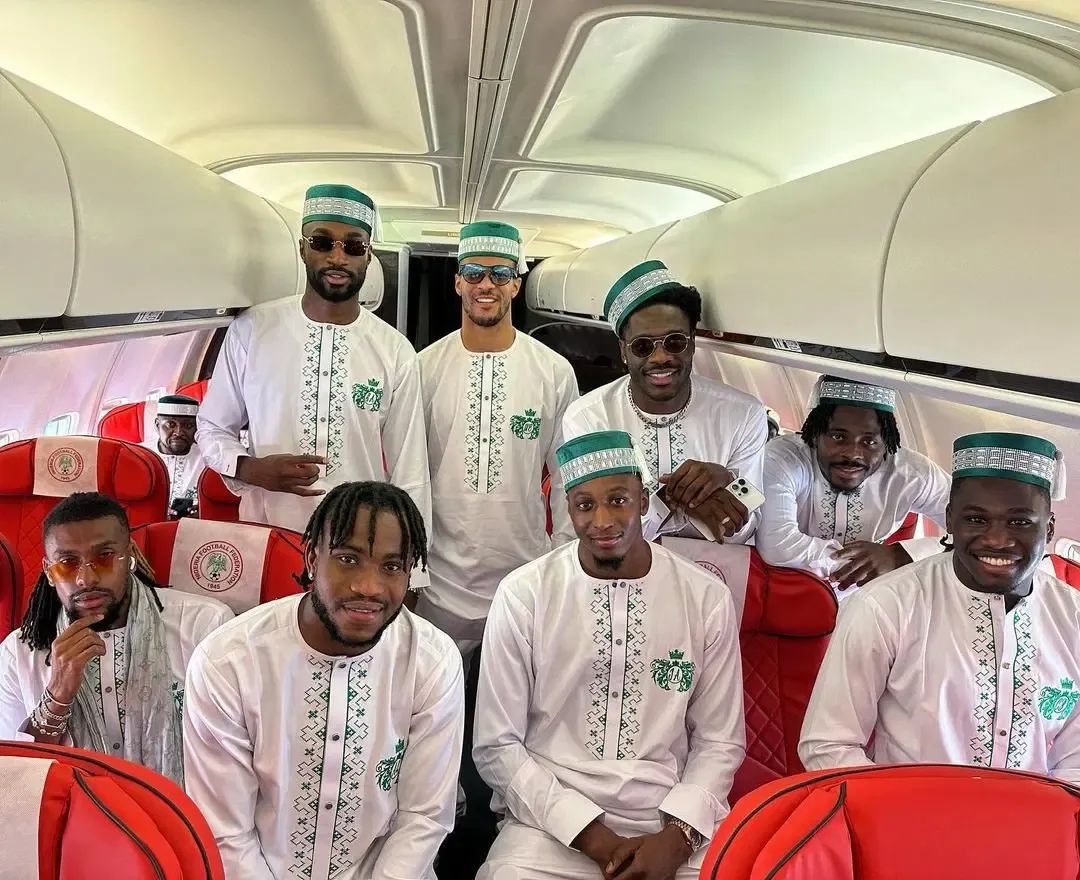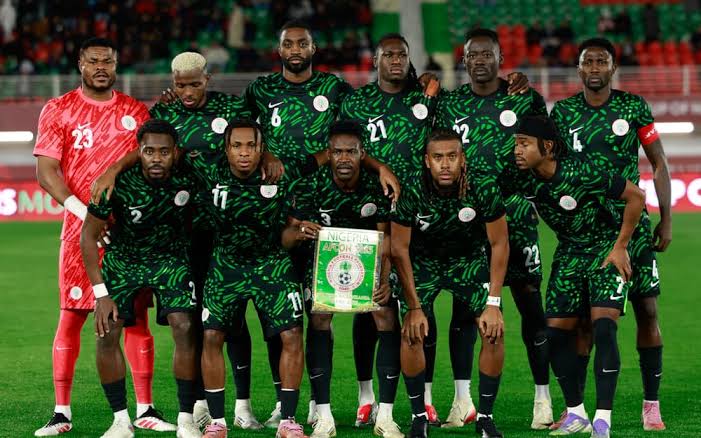
Nigeria’s Super Eagles and Algeria’s Desert Foxes are set for a heavyweight quarterfinal showdown at the 2025 Africa Cup of Nations, a contest that pits the tournament’s most ruthless attack against its most disciplined defence at the Stade de Marrakech in Morocco.
Both sides arrive in Marrakech unbeaten after four matches, but they have taken contrasting routes to the last eight. Nigeria have dazzled with attacking flair and goals from all angles, while Algeria have built their campaign on structure, control and defensive resilience.
Nigeria swept through the group stage with maximum points, edging Tanzania 2-1, outscoring Tunisia 3-2 and overpowering Uganda 3-1. In the round of 16, they produced their most complete performance yet, dismantling Mozambique 4-0 to register a first clean sheet of the tournament and underline their status as the competition’s most dangerous attacking unit.
Across those four matches, the Super Eagles have scored 12 goals, more than any other team left in the competition. Victor Osimhen, the side’s talismanic centre-forward, has been at the heart of that output, combining relentless pressing with sharp movement in the box. He has three goals to his name, matching the tally of Ademola Lookman, whose ability to drift inside from wide areas and attack space between the lines has repeatedly unsettled defences.
Beyond the headline names, Nigeria’s depth in attack has been a major factor. Akor Adams has chipped in with important contributions, while the wide options and attacking midfielders have ensured that opponents cannot simply double-mark Osimhen or Lookman. The variety of their goals – from quick transitions and cut-backs to set-piece routines – has made the Super Eagles difficult to predict and even harder to contain.
Yet for all their attacking verve, Nigeria have shown vulnerability at the back. They have conceded four goals in four matches, occasionally switching off in defensive transitions and leaving space behind their full-backs. Against a side as tactically disciplined as Algeria, those lapses could prove costly.
Algeria’s path has been less spectacular but no less impressive. They navigated the group stage with authority, keeping games under control and limiting opponents to half-chances. In the round of 16, they were pushed to the limit by DR Congo but ultimately prevailed 1-0 after extra time, with substitute Adil Boulbina striking in the 119th minute to settle a tense contest.
The Desert Foxes boast the tournament’s tightest defence, conceding just one goal in four matches. Their back line has been superbly marshalled, with the centre-backs maintaining compact distances and the full-backs choosing their moments carefully to join the attack. In front of them, a hard-working midfield screen has disrupted opposition build-up play and forced teams into low-percentage shots from distance.
Goalkeeper Luca Zidane has been a standout figure, providing calm authority and sharp reflexes. His command of the penalty area and ability to claim crosses have eased pressure on the defence, while his distribution has helped Algeria launch controlled counter-attacks. Multiple clean sheets have underlined his importance to a side that prides itself on defensive organisation.
Offensively, Algeria have been efficient rather than explosive, scoring eight goals so far. Captain Riyad Mahrez remains their creative heartbeat, drifting in from the right to dictate tempo, pick passes and threaten with his trademark left-footed strikes. Around him, mobile forwards and attacking midfielders have offered intelligent movement, ensuring Algeria can switch quickly from containment to incision.
The tactical battle in Marrakech is likely to hinge on whether Nigeria can impose their high-tempo, front-foot football on a team that excels at slowing games down and dictating rhythm. The Super Eagles will look to press high, win the ball early and attack in waves, while Algeria will aim to compress space, frustrate Nigeria’s forwards and exploit any gaps left when the West Africans commit bodies forward.
Nigeria, by contrast, are expected to field a full-strength squad, with no major injury concerns reported. That continuity could prove vital in a match where small details – a late run into the box, a defensive miscommunication, a moment of individual brilliance – are likely to decide the outcome.
History adds another layer of intrigue. In 22 meetings across competitive and friendly fixtures, Algeria hold a narrow edge with 10 wins to Nigeria’s nine, along with three draws. More tellingly, Algeria have won the last three encounters between the sides, including a dramatic 2-1 victory in the 2019 AFCON semi-final, when a late Mahrez free-kick sent the Desert Foxes into the final and ultimately to the title.
Nigeria, however, carry their own formidable pedigree. The Super Eagles have reached at least the semi-finals in 15 of their last 20 AFCON appearances, a record that speaks to their consistency on the continental stage. That history of navigating knockout pressure, combined with their current attacking form, gives them confidence that they can finally halt Algeria’s recent dominance in this rivalry.
The stakes could hardly be higher. The winner in Marrakech will advance to the semi-finals to face hosts Morocco in Rabat, after the Atlas Lions dispatched Cameroon 2-0 in their own quarterfinal.