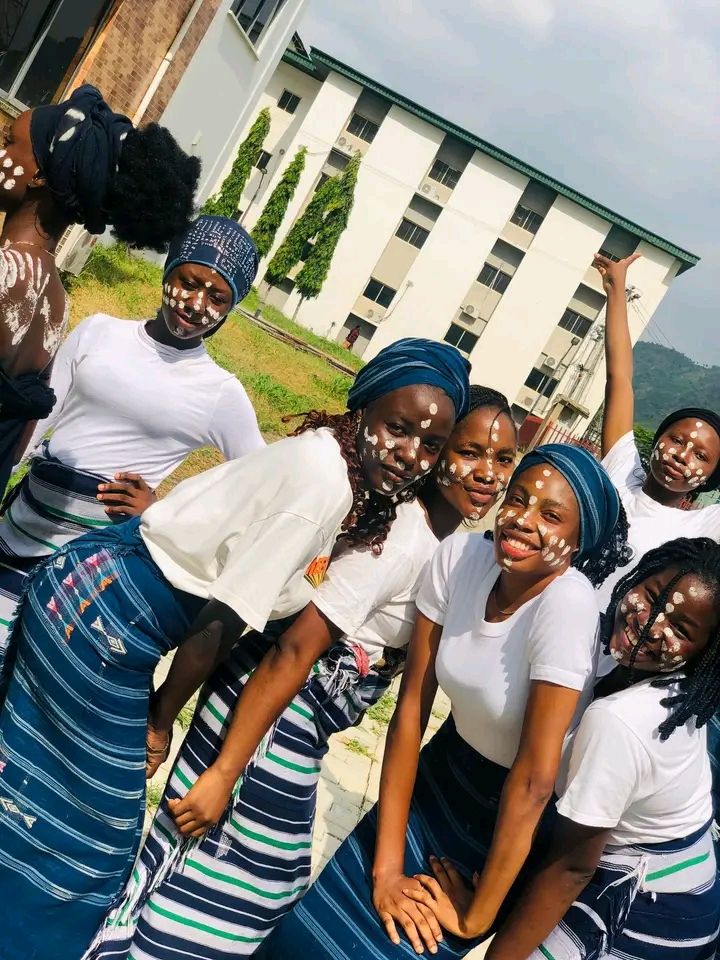
As a student of Film and Multimedia Studies at the University of Abuja, I registered for GST 112: Nigerian People and Culture, a compulsory course for all 100-level students. On July 16th, my lecturer, Mr. David Abakpa, gave an assignment to the Faculty of Communication and Media Studies as part of our Continuous Assessment (C.A) test, where each department was tasked with researching and representing a unique cultural practice. My department, Film and Multimedia Studies, was assigned the Bagyi culture, a fascinating and unconventional group with distinct traditions and customs. The Bagyi culture is known for its intriguing practices, attire, and culinary habits, which I was eager to explore and learn more about.
With less than a week to prepare for the event, my coursemates sprang into action. Some of my classmates volunteered to rehearse traditional dances and prepare traditional dishes, showcasing their enthusiasm and dedication. Although I wasn't able to participate in the rehearsals due to my hostel being far from my faculty, I contributed financially alongside my other coursemates. Despite not being directly involved in the preparations, I was confident that my coursemates would do an excellent job representing my department.
On July 16th, I had an 8am to 10am class. Later that day, we headed to the school's Convocation Ground, where the cultural event was scheduled to take place from 3pm to 6pm. As I got there, I was amazed by the diverse cultural attire on display. Different departments were dancing and showcasing their unique cultural practices. I saw Yoruba, Benin, and other cultures, each presenting their traditions in a vibrant and colorful way.
When it was time for my department, Film and Multimedia Studies, to present the Bagyi culture, a girl carrying a clay pot with smoke emanating from it led the procession. She was followed by the person giving our speech, and then the dancers performed their routine. One of the highlights of the presentation was two boys dressed in traditional Bagyi attire, with charcoal smeared on their bodies and carrying a local gun. They pointed it at the lecturer, adding a dramatic touch to the performance. My coursemates did an excellent job with the dance, speech, and food presentation, exceeding my expectations and making everyone proud.
This cultural event was an eye-opener for me, showcasing the rich diversity of Nigerian cultures. I was impressed by the enthusiasm and dedication of my coursemates, and the event was a great learning experience. It not only taught me about the Bagyi culture but also about the importance of teamwork, creativity, and cultural understanding in an academic setting. I realized that incorporating cultural events into our education can enhance our learning experience and promote interdisciplinary understanding.
In conclusion, participating in the cultural event was a valuable educational experience that broadened my knowledge of Nigerian cultures. Through this event, I gained a deeper appreciation for the importance of cultural understanding and its relevance to our academic pursuits. As students, we can benefit from more interdisciplinary approaches that combine cultural knowledge with our academic studies. This experience has shown me the value of experiential learning and its potential to enrich our educational journey.