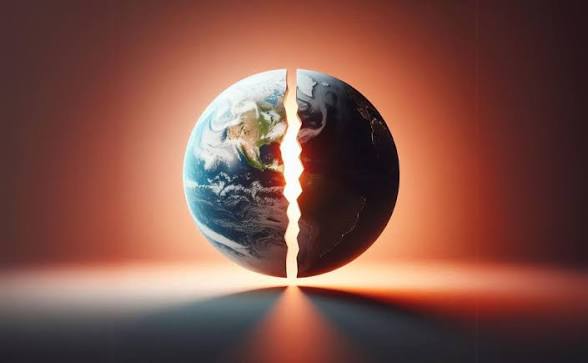
It is easy to look at the news and feel like the world is becoming a more uncertain place.
One day, we are hearing about a war somewhere in the world. The next, there is political tension between powerful countries, rising insecurity, economic problems, or another crisis making headlines.
For many ordinary people, these events can feel distant. After all, if a conflict is happening thousands of kilometres away, why should someone sitting at home worry about it?
But the truth is that in today's interconnected world, what happens in one part of the world rarely stays there.
A war can affect the price of food. Political tension can influence the economy. Rising insecurity can force families to relocate. A crisis in one country can affect fuel prices, international trade, jobs, and even the value of currencies in another.
And this is where global instability becomes a personal issue.
The Rising Cost of Living
Perhaps the most noticeable effect of global instability is economic pressure.
Across many parts of the world, ordinary people are struggling with the increasing cost of basic necessities. Food, transportation, housing, healthcare and energy are becoming major concerns for families trying to make ends meet.
For someone earning the same salary while the cost of everything around them continues to rise, the global economy is not just something discussed by economists on television. It is the reason their monthly income no longer stretches as far as it used to.
A parent who once comfortably fed a family may now have to make difficult choices.
A young person who planned to save money may find themselves spending everything on basic needs.
And someone who was already struggling financially may suddenly find themselves even more vulnerable.
Wars Have Consequences Beyond Borders
When countries go to war, the consequences are not limited to the people living in those countries.
Wars disrupt supply chains, displace millions of people, damage infrastructure and create humanitarian crises. They can also affect international trade and the movement of essential goods.
The result is that people who have never seen a battlefield can still feel the consequences of conflict.
They may experience higher prices, shortages, increased migration, or greater uncertainty about the future.
Behind every headline about war are ordinary people trying to protect their families, continue their education, keep their businesses running, or simply find a safe place to live.
Political Tensions Create Uncertainty
The world is also experiencing growing political tensions.
Countries are competing for influence, governments are facing internal challenges, and citizens in many places are becoming increasingly divided by political beliefs.
When political instability grows, businesses become cautious, investors become uncertain, and ordinary people begin to worry about what comes next.
Political decisions can influence everything from employment opportunities to education, security and access to basic services.
This is why citizens cannot afford to completely ignore politics. You do not have to be a politician to be affected by political decisions.
In fact, the average person is often the first to feel the impact when policies fail.
Insecurity Is Changing How People Live
Another major concern is insecurity.
From terrorism and armed conflict to kidnapping, organised crime and community violence, insecurity has become a reality for many people around the world.
It changes how people move.
It changes where they live.
It changes how businesses operate.
It changes how parents think about the safety of their children.
When people no longer feel safe in their communities, development becomes difficult. Businesses struggle to operate. Children may lose access to education. Families may be forced to leave their homes.
Security is not a luxury. It is the foundation upon which a functioning society is built.
The Mental Impact of Living in an Uncertain World
There is also a psychological cost that is rarely discussed.
Constant exposure to bad news can leave people feeling anxious, helpless and overwhelmed.
Every time we open our phones, there seems to be another crisis waiting for us.
War.
Economic hardship.
Political conflict.
Natural disasters.
Insecurity.
It can begin to feel as though the world is constantly falling apart.
But while staying informed is important, people must also learn to protect their mental well-being. Being informed does not mean consuming every piece of bad news from morning until night.
Sometimes, stepping away from the news for a while is not ignorance. It is self-preservation.
What Does This Mean for Ordinary People?
The biggest lesson is that global events matter, even when they seem far away.
The world is interconnected.
What happens in one country can affect another. What happens to the global economy can affect a family budget. What happens politically can influence migration, employment and international relations.
But there is also another important lesson: ordinary people are not powerless.
We can pay attention to what is happening around us. We can become more financially responsible where possible. We can question misinformation before sharing it. We can participate in our communities. We can demand accountability from our leaders.
Most importantly, we can refuse to become numb.
The world may be experiencing a period of uncertainty, but that does not mean ordinary people should give up hope.
Every crisis eventually creates a response. Every difficult period eventually produces people who choose to rebuild.
The question is not only whether the world is becoming more unstable.
The real question is: How do we prepare ourselves, our families and our communities to navigate an uncertain world without losing our humanity or our hope?
Because while ordinary people may not control global politics, they still have a voice, a choice and a role to play in shaping the world around them.