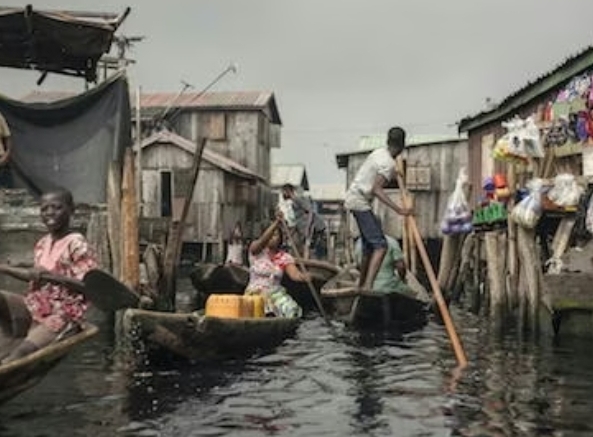
For decades, Makoko stood as one of Lagos’ most controversial urban spaces. To some, it is an eyesore, a floating slum that highlights the city’s planning failures. To others, it is a living testament to resilience, culture and survival amid systemic neglect. The recent demolition of parts of Makoko has reopened a familiar debate: is Lagos State pursuing genuine urban renewal, or is it repeating a familiar pattern of displacing the vulnerable under the guise of “development”?
Makoko’s challenges are undeniable. Estimates place its population between 80,000 and 250,000 residents, many living in stilted wooden homes over the Lagos Lagoon, with limited access to sanitation, clean water, electricity and waste management. Residents rely heavily on artisanal fishing and informal trade, making them economically vulnerable. Government authorities have long labelled Makoko an environmental and security hazard, citing flooding, fire risks and unplanned structures as justification for action. From a regulatory standpoint, these concerns appear valid, but the human and historical dimensions cannot be ignored.
Makoko is not just a collection of houses; it is one of Lagos’ oldest settlements, with roots tracing back over a century to Egun fishing communities. Its demolition threatens to erase not only homes but also history and identity. Paradoxically, Makoko has also become an international attraction, drawing tourists, researchers, architects and filmmakers intrigued by its floating architecture and unique urban design. The settlement has been celebrated globally as an example of informal urban resilience, a feature that the city risks losing entirely.