In the year 2145, technology wasn’t just a tool — it was a companion, a guide, and, for some, a friend.
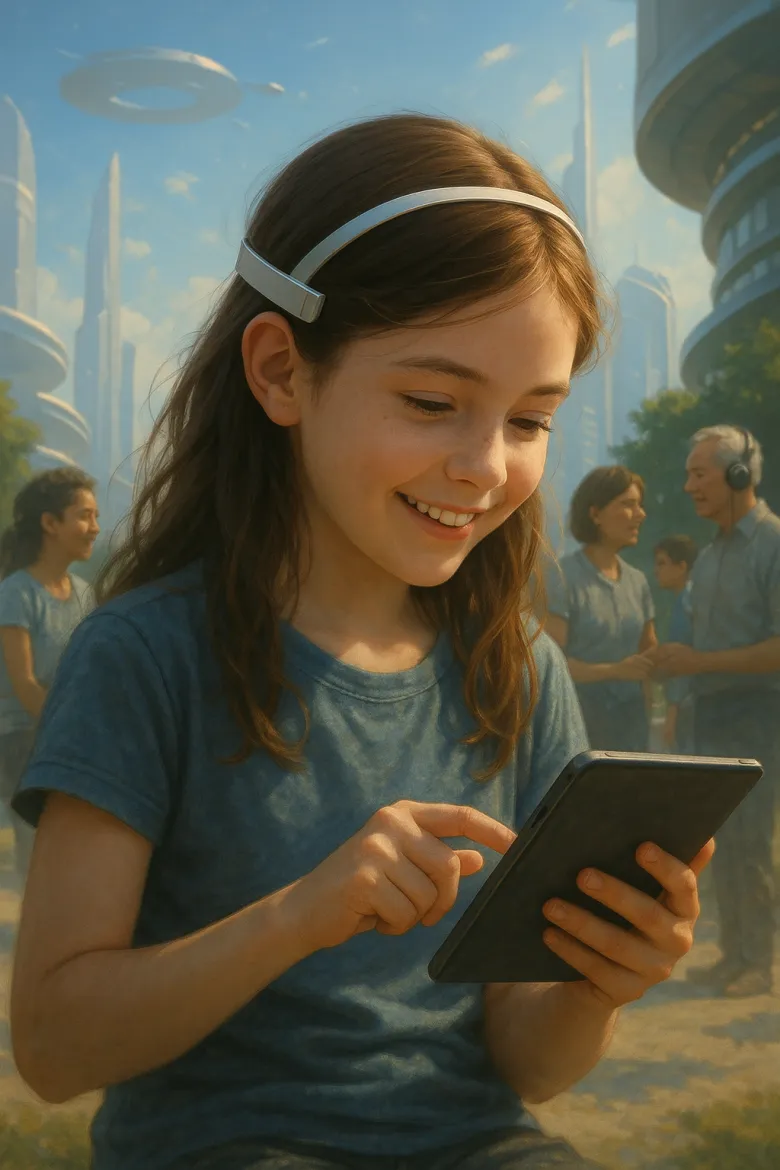
People wore ultra-thin neural bands that allowed them to think a message and send it across the globe in a blink. Cities floated above oceans, powered by clean energy pulled from the air. Cars didn’t fly — they disappeared into portals that reappeared miles away in seconds.
But with all the progress, something was missing. Human connection had grown quiet. Words were replaced with thoughts, and faces were often hidden behind digital lenses. People stopped talking, laughing out loud, or simply sitting together in silence.
Then came Ava.
Ava was just 11 years old when she hacked her own neural band—not to break it, but to disconnect from it. She wanted to know what it felt like to see the world with her own eyes, not through filters. To read a book with her hands. To talk with her voice.
At first, people thought she was strange. But then they noticed something different in her — a brightness, a warmth. Soon, her classmates joined her. Then their parents. It wasn’t about rejecting technology. It was about remembering why it was made — to bring us closer, not further apart.
And on one quiet morning, when half the planet went offline just to be present, the world didn’t shut down. It breathed.
In the future of technology, humanity rediscovered its greatest invention: connection.