Picture this: 1948, the year the world held its breath as it tries to recover from a devastating war that ended 3 years before . A city rebuilding, brick by brick, but in the heart of Manchester, England, a revolution is brewing... not of politics or bombs, but of pure, unadulterated brainpower. The kind that would change everything.
Fast forward to yesterday , I am dining in the Science and Industry Museum in the heart of Manchester, hosted by none other than tech giant Oracle. The room is buzzing with leaders from the public sector, education and various consulting technology firms, the air thick with talk of deep fakes, synthetic media, AI ethics, and cybersecurity threats that could make your head spin.
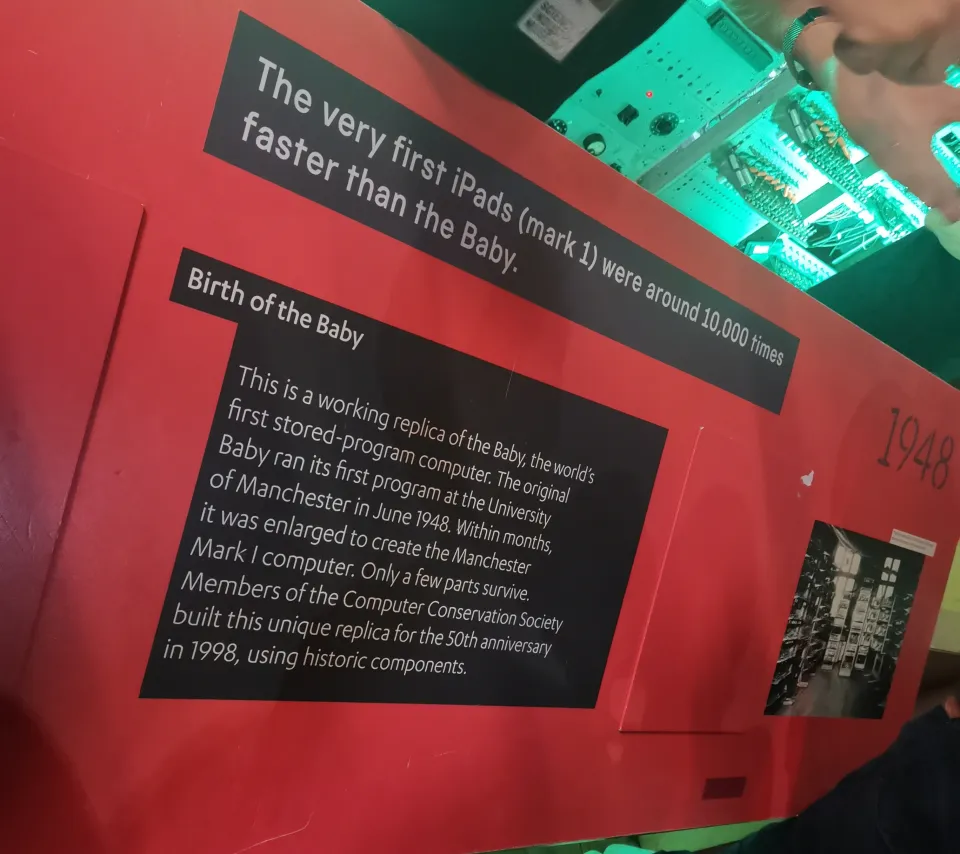
But amidst the chatter and clinking glasses, something else caught my eye. Looming in the shadows, a behemoth of metal and wires stood silent witness to the evening's revelry. It was the Manchester Mark 1, a towering replica of the world's first stored-program computer – the granddaddy of the very devices we are all so obsessed with.
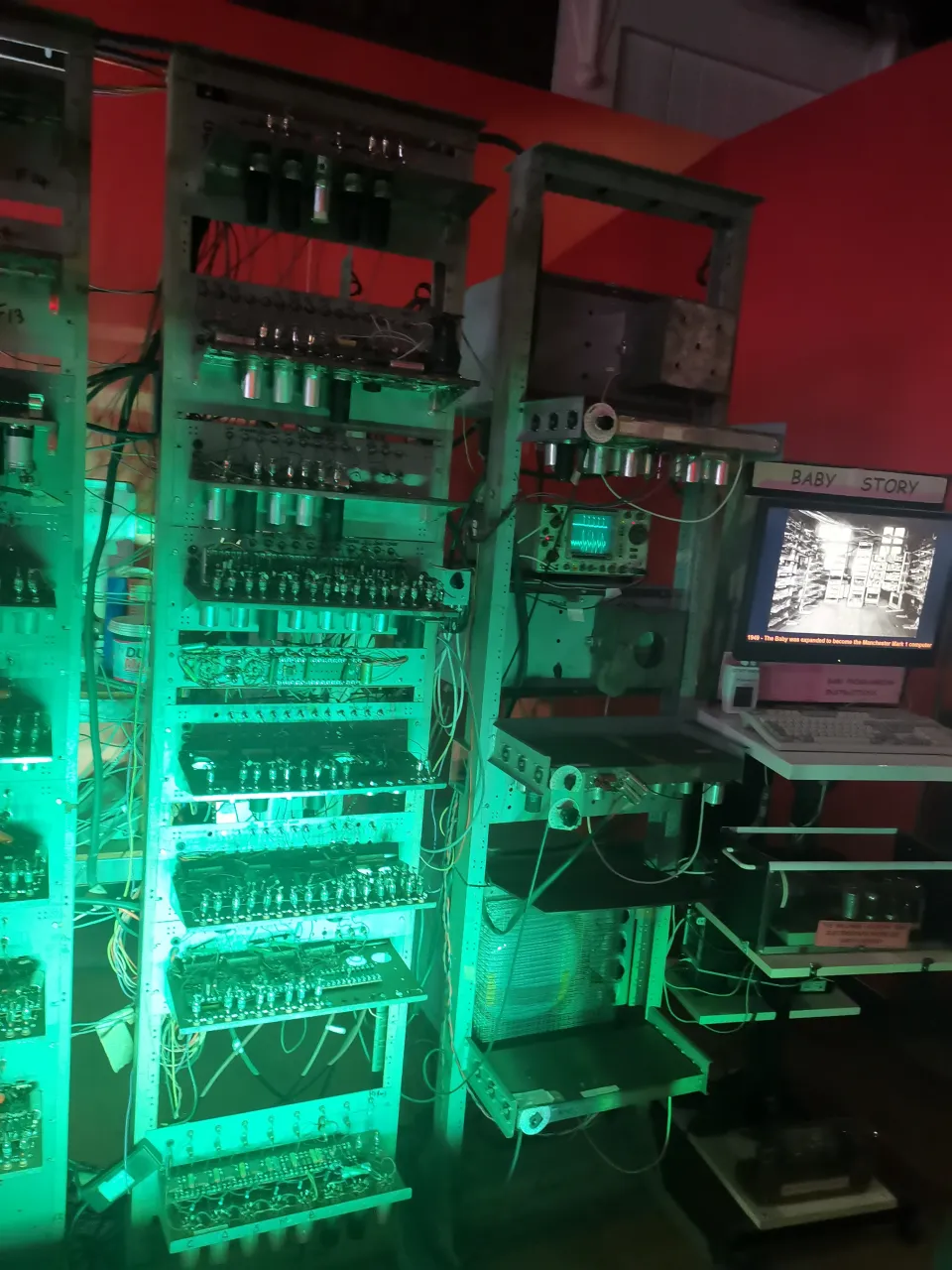
Imagine this:The Baby," as it was affectionately nicknamed, was a machine that not only crunches numbers like a maniac but remembers what you tell it. Back in 1948, this 6-foot long stack of circuits and tubes was a groundbreaking marvel, capable of storing and displaying data in ways that blew minds. Now this wasn't some dusty relic. This thing WORKED. It did sums, found prime numbers, and even ran for nine hours straight without throwing a tantrum (take note, Windows users).
It was the spark that ignited the digital revolution, leading to the birth of the Ferranti Mark 1 – the world's first commercially available computer you could actually buy.
Continue with part 2 here