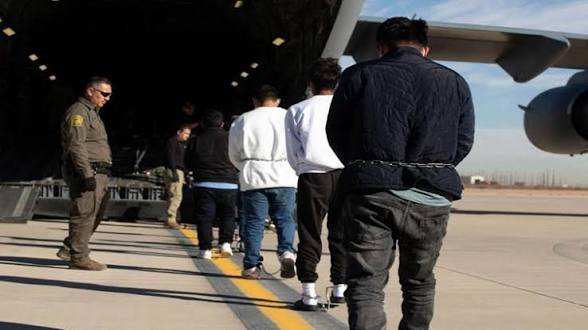
The Central African Republic has quietly agreed to receive migrants deported from the United States who are neither American nor Central African, deepening a controversial practice in Washington’s global migration policy.
The arrangement, first reported by Reuters, was reached during a visit by a US delegation to Bangui, according to officials familiar with the talks. Specifics remain opaque: there has been no public disclosure of how many people might be sent, what nationalities they are, or when flights could begin.
The deal places the Central African Republic among a growing list of African states that have accepted so-called third-country deportees from the US. At least eight countries on the continent, including Eswatini, the Democratic Republic of Congo, Ghana and Sierra Leone, have previously taken in such migrants, often in return for financial assistance, security cooperation or logistical support.
Under these arrangements, the US deports migrants and asylum seekers not to their countries of origin, but to a third state willing to receive them. Human rights lawyers argue that this practice exploits a legal grey zone, allowing governments to sidestep direct responsibility for returning people to places where they may face persecution or serious harm.
Advocacy groups say the opacity of the agreements makes independent monitoring difficult and leaves deportees vulnerable to abuse, arbitrary detention or onward refoulement to their home countries. They warn that fragile states with limited resources, such as the Central African Republic, are ill-equipped to provide protection, legal status or basic services to suddenly arrived foreigners.
Concerns over these deals are mounting across the continent. Rights organisations recently brought a case against Equatorial Guinea before the African Commission on Human and Peoples’ Rights, accusing the government of coercing deportees to return to their countries of origin in violation of regional and international human rights standards.
In Bangui, officials have not publicly confirmed the new understanding with Washington, and there has been no parliamentary debate or formal announcement. Diplomats and analysts say the agreement underscores the leverage the US can exert over aid-dependent nations, while shifting the human cost of its migration enforcement far beyond its borders.