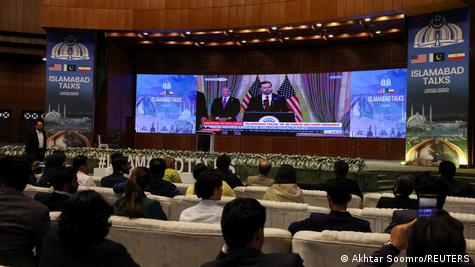
Marathon negotiations between the United States and Iran in Islamabad have ended without a breakthrough, underscoring the depth of mistrust and the complexity of issues dividing the longtime adversaries.
The talks, hosted by Pakistan in a tightly secured government compound, stretched for roughly 21 hours as diplomats shuttled between meeting rooms in an effort to narrow gaps on nuclear constraints, sanctions relief, and security in the Strait of Hormuz.
According to officials familiar with the discussions, the agenda ranged far beyond the nuclear file. Iranian negotiators pressed for an end to what they described as a broader “war against Iran and the region,” raising demands for sanctions removal, war reparations, and security guarantees. Tehran also sought assurances over freedom of navigation and noninterference in the vital shipping lanes of the Strait of Hormuz, through which a significant share of the world’s oil supply passes.
Iranian Foreign Ministry spokesman Esmaeil Baghaei said on social media that his delegation had “used all its capabilities” to defend Iran’s rights and interests. He described the exchange of documents and draft texts as extensive, suggesting that both sides had moved beyond mere exploratory talks and into detailed bargaining, even if no final accord emerged.
On the American side, US Vice President J.D. Vance emerged from the talks to announce that no consensus had been reached and that the US delegation would depart Islamabad. He praised Pakistan’s mediation, saying Islamabad had played an “active and constructive” role in trying to bridge differences, but he emphasized that Washington would not compromise on what he called its core security concerns.
Vance said the central sticking point remained Iran’s nuclear ambitions. Washington, he stressed, is demanding a clear, verifiable, and long term commitment from Tehran to forgo developing nuclear weapons or related capabilities. That demand, he noted, is a red line set by President Donald Trump and one the US is not prepared to dilute without concrete, enforceable guarantees.
The collapse of the talks leaves a fragile two week ceasefire in the region in jeopardy. Diplomats warned that without rapid follow up diplomacy, the absence of an agreement could fuel renewed hostilities, heighten tensions in the Gulf, and further destabilize an already volatile Middle East.