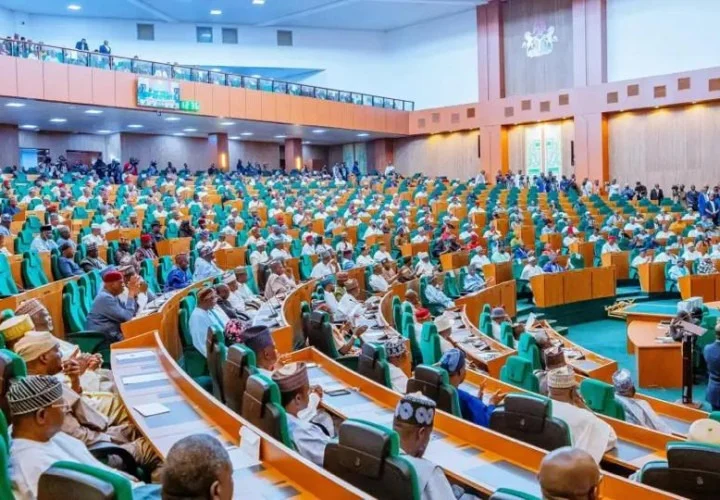
The Nigerian Senate has initiated a constitutional amendment to increase the Federal Government’s share of revenue from the Federation Account, insisting that the current formula no longer matches the scale of responsibilities handled at the centre.
The move, sponsored by Senator Sunday Karimi of Kogi West, seeks to alter key sections of the 1999 Constitution that govern how federally collected revenue is distributed among the Federal, state and local governments. The bill has passed first reading, signalling the start of what is expected to be a contentious debate on fiscal federalism and resource control.
At present, the Federal Government receives 52.68 per cent of revenue in the Federation Account, the 36 states collectively get 26.72 per cent, while the 774 local government councils share 20.60 per cent. Despite already taking the largest portion, Karimi argues that Abuja’s allocation is inadequate in light of mounting national obligations.
He contends that the existing formula is outdated and unsustainable, pointing to worsening infrastructure decay, particularly on federal highways, and the escalating cost of combating insecurity, including banditry and terrorism. According to him, funding constraints have hampered the Federal Government’s ability to maintain critical assets and respond effectively to security threats across the country.
Karimi maintains that a modest upward review of the Federal Government’s share is necessary to enable it to meet its statutory responsibilities. He insists that the centre bears the heaviest burden for defence, internal security, major transport corridors and other nationwide programmes, yet operates under a formula designed for a different economic and security reality.
The proposal comes amid renewed arguments over how best to share national resources. Labour unions, civil society organisations and opposition politicians have repeatedly criticised state governments for failing to translate rising allocations into tangible improvements in healthcare, education, infrastructure and social welfare. Supporters of the amendment say this strengthens the case for giving more resources to the level of government that carries the most visible national responsibilities.
Karimi expressed confidence that a higher allocation to the Federal Government would boost Nigeria’s capacity to tackle insecurity, rehabilitate key roads and address other pressing national challenges. The bill will undergo second reading and committee scrutiny in the coming weeks, where lawmakers, experts and stakeholders are expected to clash over how to balance federal authority with demands for greater fiscal autonomy for states and local governments.