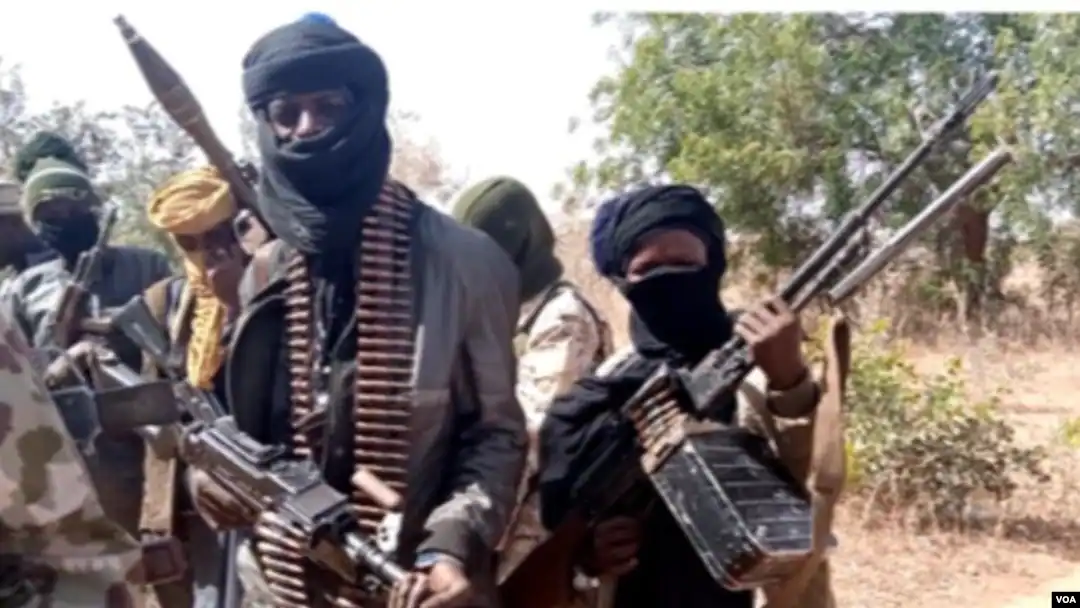
Gunmen on motorbikes stormed three industrial plants in western Mali’s Kayes region, torching facilities and abducting civilians in a coordinated assault that underscores a dangerous shift in the country’s conflict: from fighting over territory to a deliberate campaign of economic sabotage.
Local officials, security sources and business leaders say the attacks targeted factories near the town of Bafoulabé, a key hub in a region better known for its gold mines and quarries than for front-line combat. The assailants are widely believed to belong to the Group to Support Islam and Muslims, known by its French acronym JNIM, an Al-Qaeda affiliate that has steadily expanded its reach across the Sahel.
Witness accounts and preliminary security reports suggest that nearly 160 armed men, most of them riding motorbikes, converged on the three sites in a well-planned operation. They reportedly overwhelmed local guards, set buildings and equipment ablaze and seized several workers before withdrawing into the surrounding bush.
A Malian security source described the damage as “enormous,” saying the attackers appeared intent not just on intimidation but on rendering the plants inoperable. “After the economic blockade, the terrorists want to shut down the factories,” the source said, adding that government forces had been dispatched to secure the area and search for the abducted civilians.
Among the facilities hit was a plant producing calcium carbonate, lime and plaster, owned by businessman Ibrahima Diawara. Speaking after the assault, Diawara said his site had suffered “considerable damage,” with machinery destroyed and buildings burned. “Two other plants in the same area were also attacked and set on fire,” he said, warning that the blow to local industry would be felt well beyond his own company.
Conflicting reports emerged over the number of people kidnapped. Wamaps, a collective of West African journalists specializing in Sahel security issues, reported that three people were taken. An elected official from the Kayes region, however, said four civilians were abducted. Authorities have not released the identities or nationalities of those seized, and no group has publicly claimed responsibility.
The attacks fit a pattern that has been taking shape over recent months. JNIM, which operates across Mali and neighboring countries, has increasingly turned its attention to economic targets: industrial plants, mining operations, transport corridors and fuel supplies. In a statement issued earlier in the year, the group warned that it would strike industries and foreign companies doing business with the Malian state without what it called its “authorization.”
Since that threat, industrial and mining sites, particularly in western Mali, have come under growing pressure. Several facilities have been attacked or temporarily shut down, and a number of civilians, many of them foreign workers, have been kidnapped. Ransom payments from such abductions are believed to be a key source of funding for jihadist groups in the region, allowing them to buy weapons, fuel and supplies and to pay fighters.
In parallel, JNIM has imposed a fuel blockade that has rippled through Mali’s fragile economy. By targeting fuel convoys and threatening transporters, the group has made it increasingly risky and expensive to move fuel across large swathes of the country. The blockade has hit the capital, Bamako, particularly hard, triggering severe fuel shortages that disrupted public transport, slowed commercial activity and contributed to rolling power cuts.
At the height of the crisis, filling stations in Bamako saw long queues stretching for blocks, with drivers sometimes waiting hours for a few liters of fuel. Small businesses dependent on generators, from workshops to cold-storage facilities, were forced to scale back operations or shut down temporarily. The shortages also affected hospitals and water-pumping systems, exposing how vulnerable Mali’s urban centers are to disruptions in fuel supply.
Analysts say the latest attacks in Kayes show that jihadist groups are now seeking to systematically undermine the economic pillars that sustain both the Malian state and local communities. Western Mali is home not only to industrial plants like Diawara’s but also to some of the country’s most important gold mines, which generate crucial export revenue and foreign currency.
By striking factories and threatening mining operations, JNIM can exert pressure on the government, scare off investors and deepen public frustration over insecurity and economic hardship. At the same time, the group can profit directly through extortion, protection rackets and ransom payments, creating a self-reinforcing cycle of violence and economic decline.
Local officials in Kayes say the industrial sites targeted in the latest assault had already been attacked a few months earlier, suggesting that the jihadists are testing defenses and returning to sites they see as strategically valuable. Despite the deployment of reinforcements after the most recent attacks, residents express doubts about the state’s ability to protect far-flung industrial zones and transport routes.
For communities around Bafoulabé, the consequences are immediate and concrete. The factories provide jobs in a region where formal employment is scarce. They also support a network of smaller businesses, from transporters and suppliers to food vendors and traders. When plants are burned or forced to close, hundreds of families can lose their main source of income overnight.