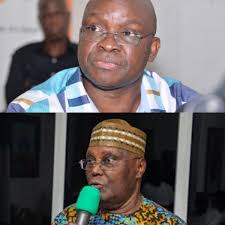
Former Ekiti State governor Ayodele Fayose has declared that former vice president Atiku Abubakar is now too old to remain in Nigeria’s presidential race, comparing him to United States President Joe Biden in debates over age and capacity.
Speaking on TVC’s Politics Tonight, Fayose argued that Atiku, now a perennial presidential contender and current African Democratic Congress, ADC, standard-bearer, should step aside for a younger generation of leaders. He described Atiku as “a good man” whose time on the frontline of national politics has passed.
According to Fayose, asking Atiku to run again in 2027 would be akin to calling Biden to seek another term despite mounting concerns about age and fitness for office. He framed the issue as one of political realism rather than personal animosity, insisting that the demands of Nigeria’s presidency require fresher energy and perspective.
Fayose went further, placing Atiku alongside President Bola Tinubu and Labour Party leader Peter Obi in what he called the final chapter of their presidential ambitions. In his view, the 2027 election cycle represents the last realistic opportunity for all three men to contest, after which the political space must inevitably open to new figures.
The former governor also cast doubt on the electoral strength of Atiku’s running mate, former Rivers State governor Rotimi Amaechi, particularly in the South-South. Fayose claimed Amaechi’s influence in Rivers has waned, predicting that he would command “very little support” in the state during the next election.
He argued that internal divisions within the ADC and the Nigeria Democratic Congress, NDC, further weaken their prospects, saying the parties lack real grassroots structures and public connection. Many of their members, he suggested, are not firmly established on the ground, limiting their ability to mobilise voters.
Fayose’s comments feed into a broader national conversation about generational change in Nigerian politics, where long-standing power brokers continue to dominate presidential contests. His remarks are likely to intensify debate over whether 2027 should mark a turning point away from familiar names toward a younger political class.