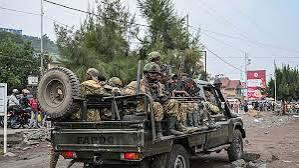
In the Democratic Republic of Congo, confusion and suspicion surround the fate of thousands of government soldiers that the M23, now operating under the AFC banner, claims to have released after months in captivity.
The rebel movement, widely described by Congolese authorities and several international observers as backed by Rwanda, announced that it had freed around 5,000 members of the Congolese armed forces FARDC. According to M23, these soldiers were handed over to the International Committee of the Red Cross, which was expected to facilitate their transfer to Kinshasa and other government-controlled areas.
The ICRC has confirmed only that it is prepared to act as a neutral intermediary, stressing that any operation must be agreed by all parties and must respect humanitarian principles, including the voluntary nature of returns and the safety of those involved. Beyond that, the organization has remained cautious, avoiding public confirmation of figures or timelines.
Weeks after the announcement, however, there is still no clear sign that a large-scale relocation has taken place. This stalemate has fuelled a war of narratives between the rebels and the Congolese government.
M23 officials accuse Kinshasa of deliberately dragging its feet, alleging that the authorities do not want to receive the soldiers, either for political reasons or out of fear that some may have been influenced or coerced during their captivity. The group has used these claims to present itself as willing to cooperate while portraying the government as indifferent to the fate of its own troops.
Congolese government sources, speaking to international media, reject those accusations. They insist that discussions are ongoing and point to serious logistical and financial constraints involved in screening, transporting and reintegrating such a large number of men. Officials also voice security concerns, questioning the real status of those held by M23 and warning that the rebels could exploit the process for propaganda or infiltration.
The uncertainty leaves families of the missing soldiers in limbo, unsure whether their relatives are alive, free or still in rebel hands. It also underscores the broader crisis in eastern DR Congo, where shifting front lines, foreign involvement and fragmented armed groups have repeatedly undermined ceasefire efforts and complicated humanitarian work.
Until a transparent, verifiable mechanism is agreed, the announced release of the FARDC soldiers risks remaining more a political instrument than a concrete step toward de-escalation.