By Ndidiamaka Ede
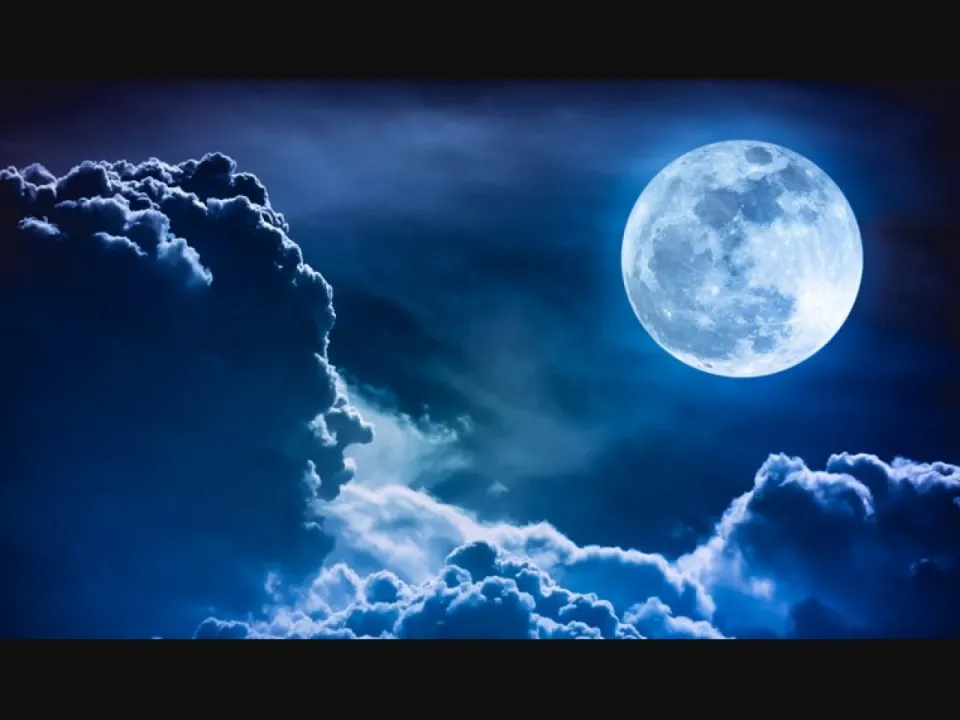
The moon is one of the Earth's objects that people wonder about how it came to be and the secrets behind its existence. In some parts of the world, the moon is accorded the same respect as gods or men.
History tells us that ancient people, including Egyptians, worshipped the moon. In some places, the new moon serves as a festival. For some generations of children, the moon is a criterion for playing at night. Imagine how the night would have been if not for the moon.
Dr. Onyeuwaoma Nnaemeka, during the occasion of an "astronomy workshop for the blind and visually impaired" at the University of Nigeria, Nsukka, UNN spoke on the theme “The wonder moon”
The event was pioneered by the National Space Research & Development Agency – Centre for Basic Space Science & Astronomy Nsukka (NASDRA-CBSS), in collaboration with the International Astronomical Union (IAU).
At the event aimed at helping the visually impaired know their environment, Dr. Nnaemeka narrated the following wonders of the moon:
The moon is a satellite that was formed out of debris from a giant impact between he Earth and another Mars-sized object in the solar system. It is a satellite because it is an object moving around another one. By extension, the Earth's only natural satellite is the moon.
The Earth's moon is like a rock that moves around the Earth in 29 days. The counting of the moon led to the calculation of days and months. It does not have an atmosphere, hence being on the moon is like being in a room with closed windows and doors without a fan or air conditioner.
The moon has a diameter of about one-quarter of Earth's, and it moves around Earth at a distance of 30 times Earth's diameter. It does not reflect its own light, but the moon's surface reflects the sun's rays. The amount of light that reflects on the surface from the sun varies every day based on its position at that point.
According to Dr. Nnaemeka, the moon has eight phases: The "New Moon" is the first primary phase, and it occurs when the Sun and the Moon are aligned, with the Sun and Earth on opposite sides of the Moon.
The moment a thin sliver of the Moon becomes visible after the New Moon is the beginning of the first intermediate phase, the Waxing Crescent Moon.
The "First Quarter Moon" is the second primary Moon phase, and it is defined as when the Moon has reached the first quarter of its orbit around Earth, hence the name.
The second intermediate phase is the "Waxing Gibbous Moon," which lasts until the next primary phase. Waxing means that it is getting bigger. Gibbous refers to the shape, which is larger than the semicircle shape of the Moon at First Quarter but smaller than a full circle. The Full Moon appears in the night sky when the Sun and the Moon are aligned on opposite sides of Earth.
The third intermediate Moon phase is the "Waning Gibbous Moon." The portion of the visible half of the Moon illuminated decreases during this period.
A Lunar Eclipse occurs when Earth moves between the Sun and the Moon, casting Earth's shadow on the Moon. The Moon does not fully disappear but turns a dim red. A Solar Eclipse occurs when the Moon moves between the Sun and Earth, blocking the light from the Sun. As the Moon crosses over the Sun, it appears as a shadow, blocking out more and more of the Sun's light.
So, an eclipse does not mean that the Earth is coming to an end; it is a natural phenomenon that can never be stopped.