Is South Africa Silencing Its Loudest Firebrand Or Finally Enforcing The Law?
South Africa woke up to political drama as Julius Malema, the fiery leader of the Economic Freedom Fighters, was slapped with a five-year prison sentence for waving and firing an assault rifle at a 2018 rally. The ruling has instantly become the country’s latest political earthquake, with supporters crying conspiracy and critics calling it long-overdue justice.
The court found Malema guilty of breaking South Africa’s tough gun laws after he was caught on camera dramatically firing the weapon into the air on stage in front of a packed crowd. Prosecutors painted the moment as reckless political theatre that glorified gun culture and put public safety at risk, insisting that no amount of revolutionary rhetoric could excuse it.
Malema’s legal team tried to spin the incident as harmless celebration, arguing that no one was in danger and that the case was really about silencing a radical voice. The magistrate was having none of it, flatly ruling that the law does not bend for “symbolic” gunfire, no matter how electrified the crowd or how powerful the politician.
Adding fuel to the fire, the case was originally pushed by AfriForum, a conservative lobby group that has made a name for itself by targeting Malema and the EFF. The group has repeatedly dragged him to court over his use of the controversial chant Kill the Boer, which it claims is hate speech against white Afrikaners. While courts have previously refused to label the chant as hate speech in specific contexts, AfriForum’s relentless legal campaigns have kept Malema under constant pressure and in the headlines.
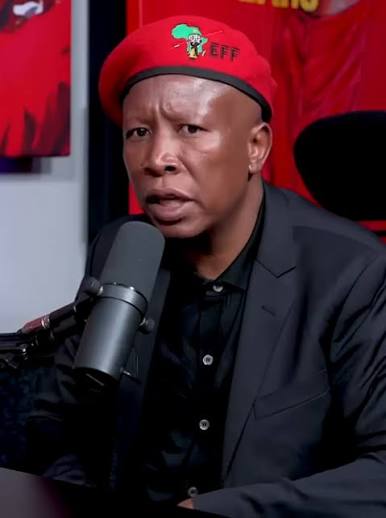
The sentencing played out live on national television from the court in KuGumpo, formerly East London, turning a legal proceeding into a full-blown political spectacle. Outside, a sea of red berets filled the streets as EFF supporters sang, chanted, and branded the entire trial a political hit job designed to crush their movement.
After being granted leave to appeal and released pending that process, Malema wasted no time going on the offensive. Addressing his supporters, he accused magistrate Twanet Olivier of racism and claimed that an invisible hand was behind the judgment, suggesting a shadowy plot to remove him from the political arena. The EFF leadership eagerly echoed this line, framing the case as a coordinated attempt to neutralise one of the country’s most disruptive and polarising figures.
Inside the courtroom, however, the magistrate tried to strip away the political theatre, insisting that the decision was purely legal. According to her, this was not about a party or a movement, but about one man who broke the law and had to face the consequences.
The stakes could not be higher. If the five-year sentence survives appeal, the constitution will block Malema from serving as a lawmaker, potentially reshaping the political map. With the EFF holding 39 seats in parliament, his removal would not just sideline a loud voice; it could shift alliances, weaken the party’s clout, and redraw the balance of power in a country already on edge.
For now, South Africa is left watching a familiar script: a defiant populist claiming persecution, a legal system insisting on neutrality, and a nation split over whether this is justice served or politics by other means.