Title: The Day the Rain Forgot Us
By Ogunyomi oluwanifemi omowonuola/ 300level Mass Communication UNILAG
The rain used to come on time.
In many Nigerian communities, people waited for the rainy season like a promise. Farmers prepared their land. Students enjoyed cooler mornings on their way to lectures. The weather followed a pattern everyone understood.
But one year, the clouds gathered… and passed us by.
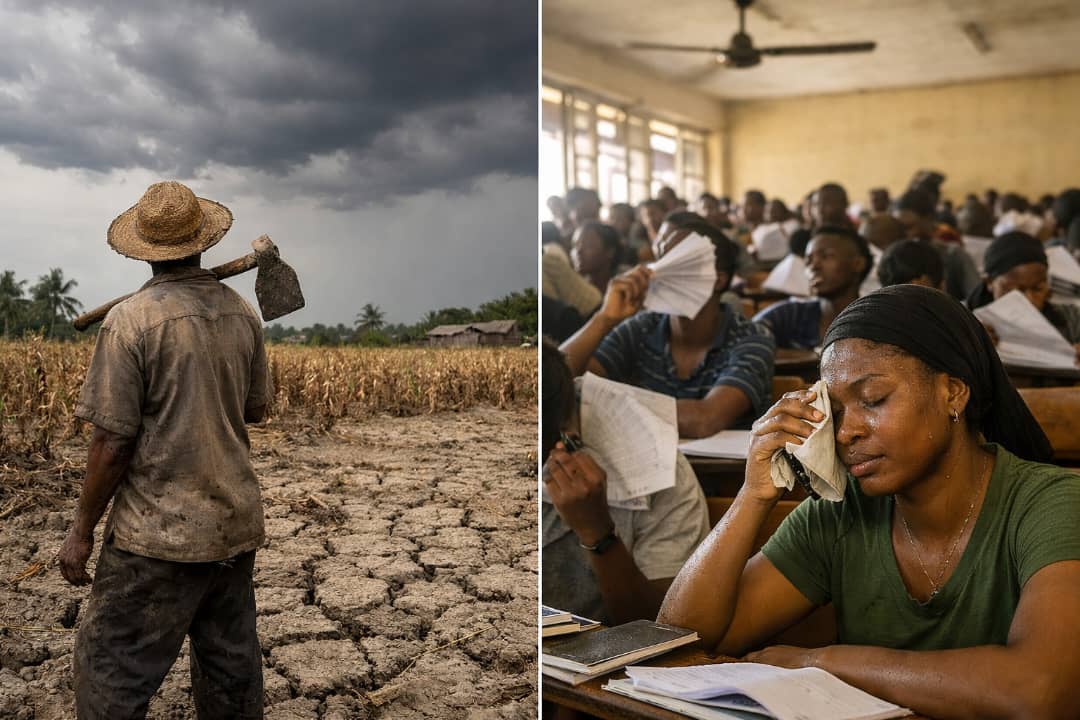
The sun stayed longer than it should have. The heat felt heavier, like Lagos traffic trapped under the afternoon sun. Boreholes began to dry up. Food prices increased because crops were not growing well. Even on campus, students complained about heat during lectures because fans and power supply were not enough to fight the rising temperature.
Something had changed.
Far away and even close to home factories released smoke into the air. Trees were cut down for buildings and roads. Generators burned fuel every day. Slowly, the Earth grew warmer, and the weather patterns people depended on started to shift.
Climate change didn’t arrive with loud noise.
It arrived quietly through delayed rain, unexpected flooding during rainy season, extreme heat that made studying harder, and weather that no longer behaved like before.
For many Nigerian students, climate change is no longer just something we read in textbooks. It affects transportation when floods block roads, electricity when heat increases energy demand, and even the cost of food in our cafeterias.
That year, we learned something important: when humans ignore the planet, the planet responds.
Now the question is simple:
Will we listen before the rain forgets us again?