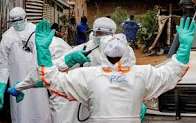
The Democratic Republic of Congo says Ebola infections have climbed beyond 5,000, with 2,378 people confirmed dead, in what health officials describe as one of the fastest-moving outbreaks the country has ever faced.
Responders on the ground warn that the haemorrhagic fever is spreading at an unprecedented pace across the country’s remote east, outstripping the capacity of health teams to trace contacts, isolate patients and safely bury the dead. From the first confirmed case in mid-May, the virus has advanced roughly three times faster than during the deadliest previous epidemic recorded in the region.
The World Health Organisation has maintained the crisis as a global health emergency, citing a high risk that the virus could spill across borders into neighbouring states. WHO Director-General Tedros Adhanom Ghebreyesus has cautioned that the epidemic is far from being under control, despite months of intensive international support.
Efforts to contain the disease in six eastern provinces are being undermined by overlapping crises: entrenched armed conflict, mass displacement and a fragile health system hollowed out by years of underinvestment. Clinics and treatment centres struggle with shortages of basic supplies, while funding delays have left many frontline workers unpaid for months, prompting strikes and walkouts at a critical moment.
“We are exhausted,” said nurse Thérèse Anyiya, who works in Bunia, the capital of Ituri province. “The patients keep coming, but we do not have the staff, the equipment or the security we need.”
Deep mistrust of authorities and foreign health teams has further complicated the response. In parts of Ituri, where the outbreak is most intense, rumours and fear have fuelled violent attacks on medical staff. In the territory of Aru, residents recently assaulted a health team after a suspected case was reported, setting an ambulance ablaze and damaging other vehicles, according to local civil society leader Michael Wani.
The current epidemic is driven by the rare Bundibugyo strain of Ebola, for which there are no fully approved vaccines or treatments, limiting the tools available to responders. Surveillance teams report that most new infections are emerging outside known contact lists, a sign that the virus is spreading undetected through communities.
Overall, the case fatality rate stands at about 47 per cent, but in hard-to-reach areas such as North Kivu it is estimated at 70 per cent. Experts believe the virus may have been circulating silently since February in the mining town of Mongbwalu, long before authorities formally declared the outbreak in May, giving it a crucial head start over the response.