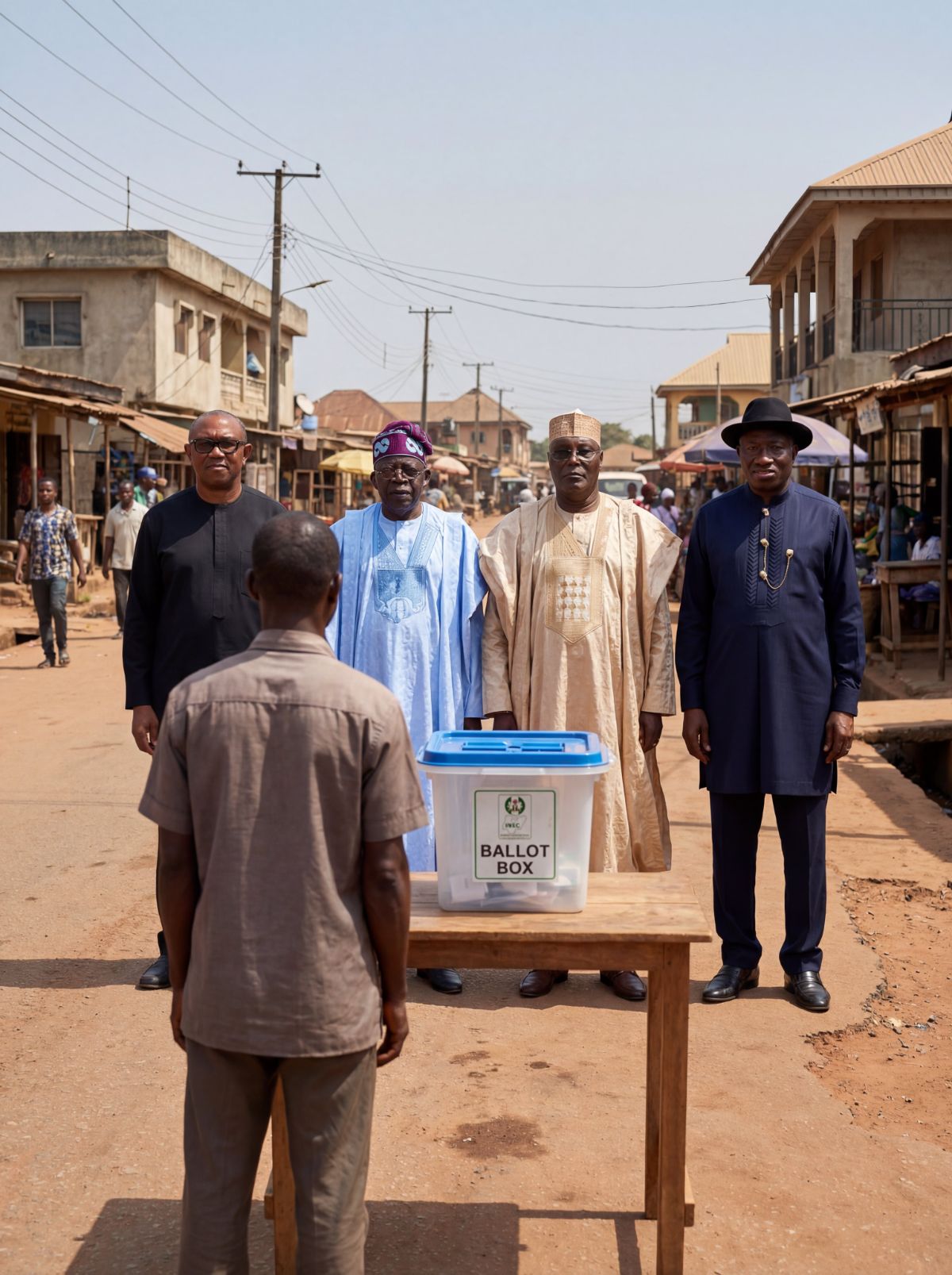
There is a popular narrative we like to repeat in this country: we need new competent faces in our politics, and that good people should engage in active politics. As a result of this, we always waiting for angels to come through to save us. This sounds attractive. It gives the impression that the problem is simply about who is in office as our leaders. But if we are honest with ourselves, that is not where the real problem lies.
The system we operate today is not built to produce genuinely new competent or even angelic leaders. It is designed to recycle the same kind of people, over and over again. The names may change, the faces may look different, but the structure that produces them remains the same. And as long as that structure does not change, the outcome will not change. We will keep recycling the same sets of politicians or their protégés.
What many people call “new faces” are often just extensions of the old order. They come through the same networks, depend on the same sponsors, and play by the same rules. By the time they emerge, they are already shaped by the system they are entering. So expecting them to behave differently is like expecting a river to suddenly change direction without touching its source.
Politics in Nigeria today is heavily driven by cash. Not just money in the normal sense, but money at a scale that shuts out serious, competent people who do not have access to it. From party processes to general elections, everything comes with a cost. Forms are expensive. Campaigns are expensive. Even basic political visibility requires deep pockets. This is in addition to shady spending to induce officials and buy voters.
To be sincere with ourselves, how many genuinely competent people, working honestly to earn money legally, can afford that kind of spending? Very few. And those who can spend at that level are often those who have had access to public resources or powerful political networks. That is why the same type of candidates keeps appearing on the ballot. It creates a closed space. Those inside it keep coming back. Those outside it can hardly break in. They simply cannot compete.
So if we keep waiting for new, independent, highly competent candidates to suddenly appear and transform everything, we may have to wait for a very long time, and they are never coming if we maintain the current political culture. The system, as it stands, does not favour for any competent candidates to emerge.
But this does not mean citizens are powerless. Far from it. The real power of the voter is not in searching endlessly for perfect or competent candidates. It is in enforcing consequences. That is where we have not been consistent. That is where the system has taken advantage of us.
Democracy is not about choosing angels. It is about ensuring that those who fail do not remain in office. Once a leader knows that poor performance will cost them their seat, they will think twice before taking the public for granted.
In our case, that consequence is simple: vote them out. If a governor fails, vote them out. If a legislator is ineffective, vote them out. If a president does not meet expectations, vote them out. It does not have to be complicated. It does not require anger or violence. It only requires decision.
The mistake we often make is to tolerate failure because we are waiting for a better alternative. In doing so, we send the wrong message. We tell those in power that performance does not really matter. And once they learn that lesson, they behave accordingly.
But the moment voters begin to act differently, the system will begin to adjust. When politicians realise that they can lose their positions simply because they did not deliver, their approach will change. They will become more careful. They will pay more attention. Even those coming into the system will understand that survival depends on performance, not loyalty to political godfathers.
That is how real change begins. Not from speeches. Not from slogans. But from consistent action by voters. We do not have to wait for new faces. Waiting suggests that change will come from somewhere else. It will not. The system only responds when it is forced to respond.
Vote out those who fail. Replace them with whoever is available. Do it again, and again, and again. Over time, that simple act will reshape the political space more than any promise of competence ever will.
Because in the end, competence in public office is not something that appears by chance. It is something that is enforced. And in a democracy, the responsibility to enforce it rests with the people.