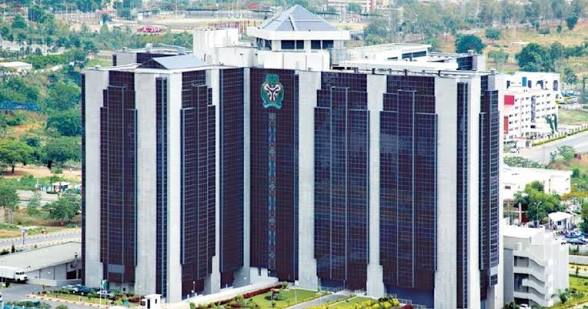
Nigeria imported $3.74bn worth of crude oil for processing at the Dangote Petroleum Refinery in 2025, marking a striking shift in the country’s oil trade profile despite its status as a major crude producer, according to the Central Bank of Nigeria’s latest Balance of Payments report.
The CBN disclosed that the crude volumes brought in by Dangote were significant enough to feature explicitly in its external accounts, noting that “crude oil imports of $3.74bn by Dangote Refinery” were a key factor influencing movements in the current account.
Nigeria’s current account surplus stood at $14.04bn in 2025, down from $19.03bn the previous year but still more than double the $6.42bn recorded in 2023. The central bank linked part of the decline to structural changes in oil trade flows, including the growing role of imported crude for domestic refining.
Crude oil export earnings fell from $36.85bn in 2024 to $31.54bn in 2025, a 14.41 per cent drop that weighed on the external balance. Yet the goods account remained resilient, posting a surplus of $14.51bn in 2025, up from $13.17bn a year earlier, supported by the ramp-up of refining activity and stronger non-oil exports.
The CBN highlighted “significant export of refined petroleum products worth $5.85bn by Dangote Refinery” as a major boost to the goods surplus, alongside higher gas exports. The refinery’s output also curbed Nigeria’s dependence on imported fuel, with refined product imports plunging to $10.00bn from $14.06bn, a 28.88 per cent decline.
However, gains from reduced fuel imports were partly offset by rising non-oil imports, which climbed 13.60 per cent to $29.24bn, underscoring persistent demand for foreign manufactured goods and inputs.
Service-related outflows added further pressure. Net payments for services increased to $14.58bn from $13.36bn, driven by transport, travel, insurance and other charges. Primary income outflows, mainly dividends and interest to foreign investors, surged 60.88 per cent to $9.09bn, while secondary income inflows slipped to $23.20bn from $24.88bn as official aid and some transfers weakened.
On the financial account, Nigeria swung to a net borrowing position of $1.69bn in 2025, compared with net lending of $9.65bn in 2024. Portfolio investment inflows dropped sharply to $8.04bn, even as foreign direct investment rose to $4.01bn from $1.61bn, signalling a tilt toward longer-term capital.
Despite these pressures, the overall balance of payments remained in surplus at $4.23bn, though lower than $6.83bn in 2024. External reserves climbed to $45.75bn, a 13.83 per cent increase, providing a stronger buffer against external shocks even as the Dangote refinery’s crude import needs redraw Nigeria’s oil trade map.