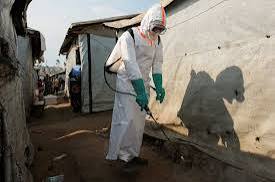
The Ebola outbreak in the Democratic Republic of Congo is threatening to unleash a deep social and economic crisis across Central and East Africa, with potential losses of up to $3.6 billion, according to a new assessment by the United Nations Development Programme.
UNDP warns that the epidemic, centred in the conflict-ridden Ituri province, is no longer just a health emergency but a development crisis that could push nearly one million additional people into poverty. The agency says women, who dominate informal trade and caregiving roles, are likely to bear the brunt of the shock.
“Ebola does not stop at the hospital gate,” said Ahunna Eziakonwa, UNDP’s regional director for Africa. “It affects livelihoods, education, food security, trade, public finances and trust. If we treat this Ebola outbreak solely as a health challenge, we risk missing the much larger development emergency unfolding around it.”
World Health Organization figures cited by UNDP show more than 1,300 confirmed cases in the DRC, with hundreds of deaths and fewer than 200 recorded recoveries. Uganda has also reported confirmed infections, underscoring the risk of cross-border spread in a region marked by porous frontiers and intense population movement.
Even under a relatively contained scenario, UNDP projects “severe” economic damage. The DRC alone could suffer real GDP losses exceeding $1 billion and the disappearance of some 55,000 jobs. Across the continent, trade disruptions, tighter border controls, transport delays, falling consumer confidence and interruptions to informal markets could shave an estimated $2.37 billion from Africa’s GDP, rising to $3.6 billion if regional and global shocks intensify.
UNDP stresses that some of the measures intended to curb transmission are themselves undermining fragile economies. Quarantines, blanket travel restrictions and border closures are choking off cross-border trade, limiting access to markets and cutting incomes for small traders, farmers and transport workers.
To blunt the impact, the agency recommends direct cash transfers to the most vulnerable households, replacing sweeping border closures with targeted health screening, and creating emergency financing mechanisms to keep essential services running, particularly maternal, reproductive and infant healthcare.
The current epidemic is driven by the Bundibugyo species of the Ebola virus, for which there is no approved vaccine or specific treatment, heightening the urgency of both containment and economic mitigation efforts.