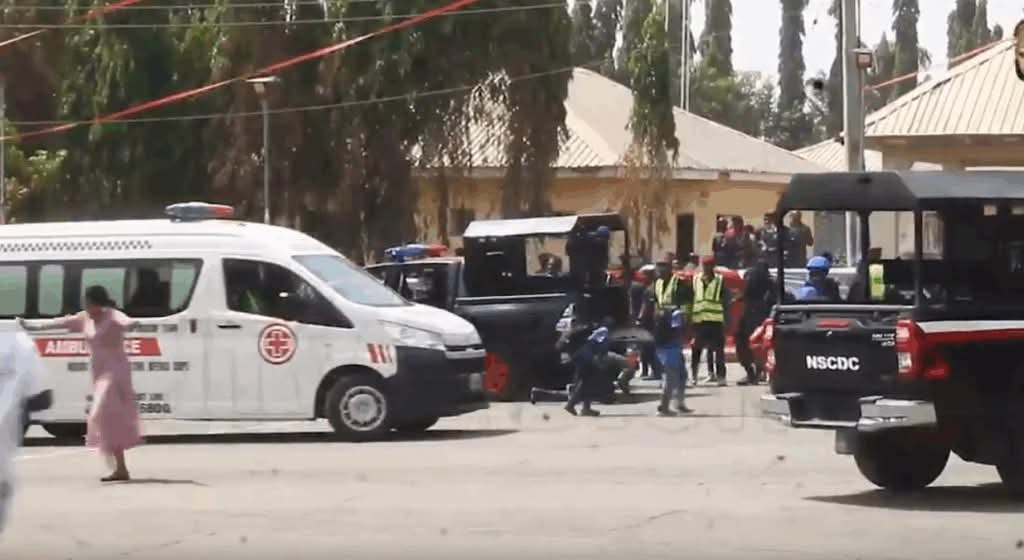
A tactical drill by the Nigeria Security and Civil Defence Corps in Abuja ended in tragedy when a female officer was crushed to death by an operational van belonging to the Corps’ Female Strike Force.
The incident occurred during a “show of force” exercise by the specialised female unit, also known as the Female Squad, in the Federal Capital Territory. A short video of the drill, widely shared on social media, shows two black NSCDC vans moving in formation along a roadway, with officers positioned around them as part of a coordinated display.
The lead vehicle, a black van with red wheels and the inscription “Female Squad” on its body, is seen attempting a turn while a second van, marked “Female Strike Force FCT Command,” follows closely behind. In the course of the manoeuvre, one of the female officers appears to lose her footing near the moving vehicle. The van then runs over her, pinning her underneath its chassis.
In the video, fellow NSCDC personnel and bystanders immediately abandon the formation and rush towards the scene. Several of them are seen surrounding the van and, in a frantic rescue effort, lifting the vehicle collectively to free the trapped officer. She is then carried into a waiting ambulance as onlookers watch in shock.
The NSCDC has not yet released a detailed official statement on the circumstances of the accident, but the Corps’ spokesperson, Afolabi Babawale, confirmed in a telephone conversation with journalists that the officer did not survive. He indicated that the Corps would issue a comprehensive report after internal procedures and notifications to the family had been completed.
As at the time of reporting, the identity of the deceased officer had not been made public. However, the footage has sparked widespread concern over safety protocols during security drills and public displays by armed services. Commentators online have questioned the proximity of personnel to moving vehicles and the apparent lack of visible protective barriers during the exercise.
The Female Strike Force was created as a specialised unit within the NSCDC to respond to emerging security threats and to provide a visible symbol of women’s participation in national security. The fatal accident has now cast a shadow over that mission, prompting calls for a thorough review of training standards, risk assessments and crowd-control measures during such demonstrations.





.jpeg?alt=media&token=96b327a5-8e62-4ed1-a078-308aff149ed1)