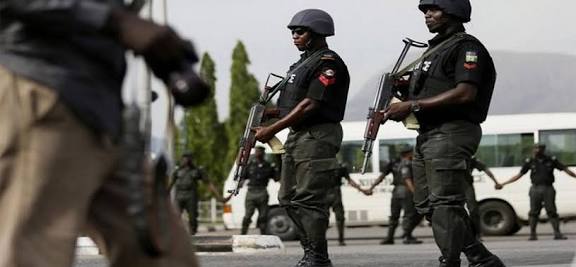
The Nigeria Police Force has handed over a fugitive, Matthew Chukwuemeka Adebiyi, to authorities in the United Kingdom to face charges of murder and drug trafficking, following a coordinated international operation led by INTERPOL.
According to police sources, Adebiyi was the subject of a formal request from UK law enforcement, transmitted through the INTERPOL National Central Bureau in Abuja. British investigators had sought his arrest and extradition after linking him to the killing of 20-year-old Joshua Boadu in south London and to an alleged crack cocaine supply network.
UK court records and police briefings indicate that Boadu was stabbed during a confrontation in the Tooting area of London. Detectives from the Metropolitan Police identified Adebiyi as a key suspect in the attack and in a wider Class A drug operation said to have run between late 2017 and early 2018. Shortly after Boadu’s death, Adebiyi reportedly left the UK and resurfaced in Nigeria, where he is believed to have been living under the radar.
Nigerian police said operatives of INTERPOL Abuja tracked and arrested him in January after intelligence sharing with their British counterparts. The arrest triggered a series of legal steps at the Federal High Court in Lagos, where prosecutors argued that the offences for which he was wanted in the UK were also crimes under Nigerian law, satisfying the conditions for extradition.
The court granted the extradition request, clearing the way for Nigerian authorities to surrender Adebiyi to British officers. He was escorted under tight security to Murtala Muhammed International Airport in Lagos, where he was formally transferred to a UK escort team for the flight back to London to stand trial.
Inspector-General of Police Olatunji Rilwan Disu said the case underscored Nigeria’s determination to cooperate with foreign partners in tackling transnational crime. He stressed that the country would not provide refuge for individuals seeking to escape justice abroad, particularly in cases involving violent crime and narcotics.
The extradition is seen by security analysts as part of a broader effort by Nigerian authorities to strengthen mutual legal assistance with other nations, using INTERPOL channels and bilateral agreements to pursue suspects across borders and dismantle criminal networks operating between West Africa and Europe.