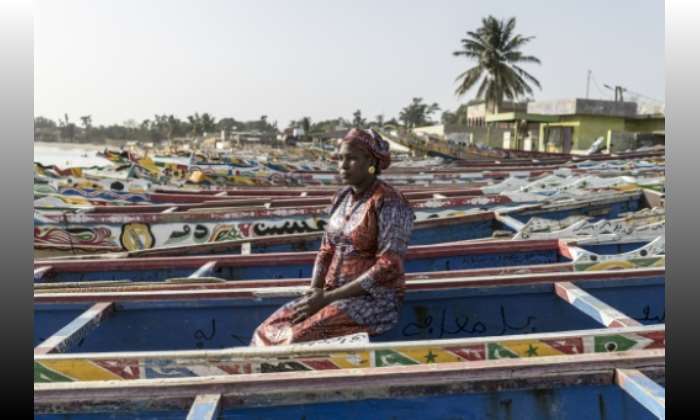
Senegal Mother Turns Grief Into a Fight for Missing Migrants
In the coastal town of Mbour, where the Atlantic surf hides countless unmarked graves, one mother has turned personal tragedy into a relentless campaign for truth and dignity.
Years ago, 19-year-old Mamadou kissed his mother, Aminata Boye, goodbye and boarded a wooden pirogue bound for Europe. The boat never arrived. No body was recovered, no official explanation given. Like thousands of West African families, the Boyes were left in a tormenting limbo: no proof of death, no hope of return.
Refusing to accept silence as an answer, Boye began to investigate on her own. She walked the beaches where wrecked boats washed ashore, called distant ports, and tracked rumours of survivors. Her persistence led her to humanitarian organisations, including the Red Cross, which helped her learn how to trace missing people and verify information from scattered reports.
From this painful apprenticeship, she built something larger than her own search. Boye founded the Collective of Victims of Irregular Emigration in Senegal, a grassroots network that now brings together more than a hundred women whose children, husbands or siblings vanished at sea.
The collective helps families file missing-person reports, navigate bureaucracy and access psychological support. Volunteers compile lists of names, last known locations and boat departures, sharing them with international agencies in the hope of matching them with survivors or recovered remains.
Boye also spends hours listening. In Mbour’s Tefees neighbourhood, she visits cramped homes where framed photographs of young men and women are displayed like shrines. Mothers arrive in tears, clutching phone numbers that no longer connect. One of them, Ndeye Ndiaye, says she was on the brink of losing her sanity after her daughter disappeared. Sitting with Boye, she found someone who understood the particular agony of not knowing.
For Boye, the fight is not only about mourning the dead and finding the missing. It is also about confronting the conditions that push young Senegalese to risk the Atlantic in the first place. She argues that governments must create real economic opportunities at home and open safer, legal pathways for migration, so that ambition does not become a death sentence.
“Young people do not go to sea to die,” she tells the families who gather around her. “They go because they want to live.”