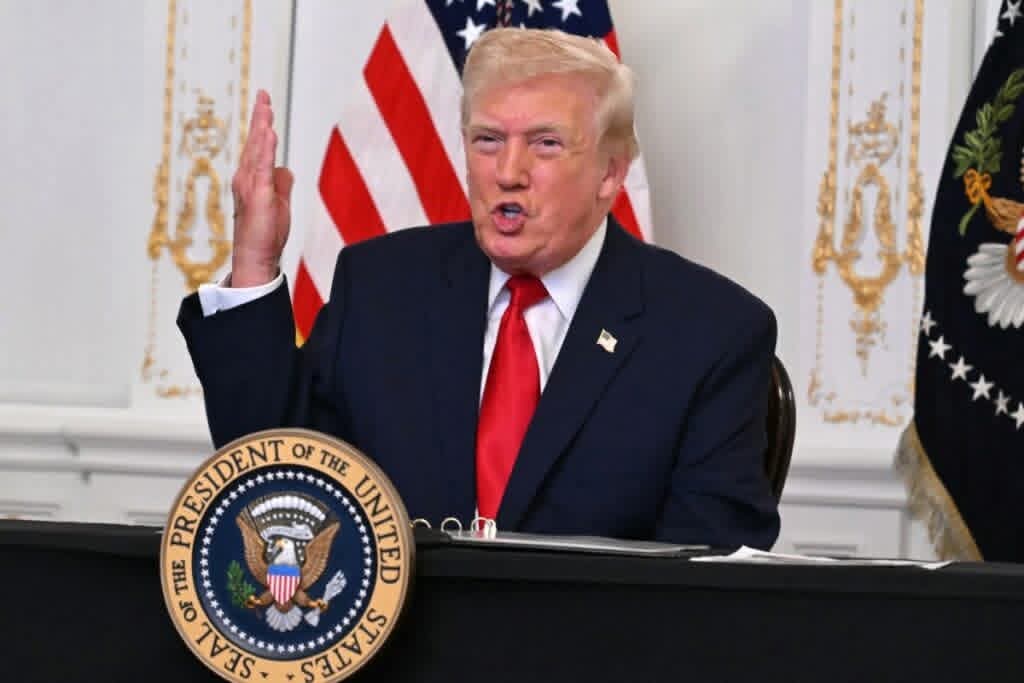
Asian equities climbed as investors welcomed the abrupt withdrawal of Donald Trump’s threat to slap tariffs on several European countries over their opposition to a proposed US takeover of Greenland, easing fears of another front in the global trade wars.
The move extended a tentative recovery across regional markets, even as traders remained wary of the broader direction of US policy and its implications for global growth, currencies and commodities.
From Tokyo to Bangkok, major Asian bourses built on the previous session’s gains. Tokyo’s Nikkei 225 added 0.3 per cent to close at 53,846.87, while Hong Kong’s Hang Seng Index rose 0.5 per cent to 26,749.51. Shanghai’s Composite Index advanced 0.3 per cent to 4,136.16, with Taipei, Sydney, Seoul and Singapore also in positive territory.
European markets were more subdued. London’s FTSE 100 opened flat at 10,152.45, while Paris and Frankfurt slipped in early trade, reflecting lingering caution despite the easing of immediate trade tensions. On Wall Street, the mood was more upbeat, with the Dow Jones Industrial Average logging a second consecutive advance, closing 0.6 per cent higher at 49,384.01.
The catalyst for the rebound was Trump’s decision to step back from a threat to impose tariffs on a group of European nations that had opposed Washington’s push to acquire Greenland, the Danish autonomous territory in the Arctic. The episode had alarmed investors, who saw it as another example of the White House’s willingness to weaponise trade policy for geopolitical leverage.
Analysts warned that the retreat did not necessarily signal a lasting thaw in transatlantic relations. Trump’s readiness to brandish tariffs over a wide range of disputes has unsettled trading floors for years, and the Greenland episode reinforced the perception that policy risk remains elevated.
“The bar for using tariffs as a negotiating tool has been set very low,” said one strategist at a major Asian brokerage. “Even when threats are walked back, the damage to confidence lingers because businesses and investors cannot plan with certainty.”
The renewed volatility in US policy has weighed on the dollar in recent sessions, pushing investors toward traditional safe havens. Gold surged to a fresh record above $4,967 an ounce in Asian trading, while silver climbed past $99, extending a powerful rally in precious metals driven by geopolitical jitters, concerns over central bank independence and expectations that global interest rates will remain low for longer.
The dollar’s performance was mixed. It struggled against most major currencies but firmed against the yen after the Bank of Japan opted to leave interest rates unchanged. The dollar bought 158.50 yen, up from 158.39 yen previously, after the BoJ signalled it would pause before considering further tightening while it assesses the impact of earlier rate hikes on an inflation rate that remains above its two per cent target.
In Europe, the euro slipped to $1.1739 from $1.1751, while the pound edged down to $1.3496 from $1.3500. The euro also weakened slightly against sterling, trading at 86.98 pence compared with 87.05 pence.
Oil prices inched higher, supported by the improved risk tone and ongoing supply discipline from major producers. West Texas Intermediate crude rose 0.5 per cent to $59.63 a barrel, while Brent North Sea crude added 0.4 per cent to $64.34.
With the immediate Greenland dispute defused, investor attention shifted back to the fundamentals of the US economy and the looming Federal Reserve policy meeting. Revised figures showed that US economic growth in the third quarter was slightly stronger than initially estimated, helped by firmer exports and business investment. Separate data indicated that jobless claims had dipped and inflation had eased back toward levels seen before last year’s government shutdown.
The data reinforced expectations that the Fed will leave interest rates unchanged at its upcoming meeting, after cutting them at three consecutive gatherings. Markets are now focused on how policymakers will frame the outlook for growth, inflation and future rate moves in an environment of political pressure and heightened scrutiny.
The central bank’s independence has come under renewed spotlight after US prosecutors issued subpoenas related to a $2.5 billion renovation of the Fed’s Washington headquarters, a move that some in the market interpreted as an attempt to increase leverage over Chair Jerome Powell. Trump has repeatedly attacked Powell for not cutting rates more aggressively, and the investigation has added a new layer of tension.
“The bar to a further cut is too high and, Steve Miran notwithstanding, the Federal Open Market Committee are likely to err on the side of a hold, which will inevitably incur the wrath of President Trump,” wrote Michael Hewson of MCH Market Insights, referring to one of Trump’s appointees to the Fed.
Fiona Cincotta at City Index said the latest figures gave policymakers little reason to ease further. “Sticky inflation and solid growth provide little incentive for the Fed to cut rates further for now. These data points support the Fed’s wait-and-see stance,” she noted.
The meeting comes as Trump weighs potential successors to Powell, whose term ends in May. The president told reporters he had settled on a candidate. “I have somebody that I think will be very good but I’m not going to reveal it,” he said, describing the person as “very respected, very, very well known” and predicting they would “do a very good job.”
Corporate news added another layer of interest for equity investors. In Tokyo, Nintendo shares jumped as much as 6.9 per cent after market research firm Circana reported that the company’s Switch 2 console led the US hardware market in both unit and dollar sales in 2025. The stock pared some gains but still closed 4.5 per cent higher.
“Switch 2 remains the fastest-selling video game hardware platform in tracked history,” Circana analyst Mat Piscatella wrote on social media, underscoring the console’s strong momentum heading into a crowded holiday and earnings season.
Next week’s US earnings calendar is packed, with Apple, Microsoft, Boeing, Tesla, Meta and other corporate heavyweights due to report results. Their guidance on consumer demand, investment plans and cost pressures will be closely watched for clues about the durability of the US expansion and the resilience of corporate profits in the face of policy uncertainty.
For now, the withdrawal of the Greenland tariff threat has bought markets some breathing space. But with trade tensions, central bank politics and geopolitical flashpoints all in play, few investors are betting that the calm will last.