The village hall smelled like dust and kerosene.
It was 2003. The projector coughed to life and painted a fight scene on the cracked wall. Two men in Lagos were throwing punches. Cars were crashing.
Silence.
Then Uncle Emeka stood up.
“Paw paw!” he shouted, and slapped his thigh. The whole hall burst out laughing.
Mama Ngozi did the car sounds. “Vroom vroom... kraaash!”
We didn’t need sound. We were the sound.
Years passed.
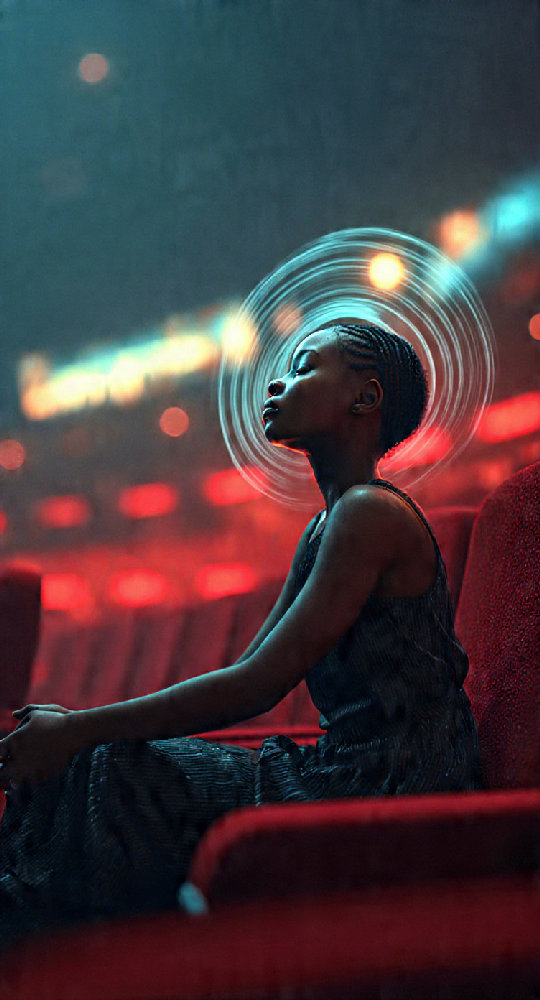
Last Friday I walked into a cinema in Onitsha for the first time. Aircon cold enough to bite. Seats red like pepper.
The lights went down.
For 3 seconds: nothing.
Then a door creaked.
Distant traffic.
A generator humming from somewhere far.
Then highlife music, low, under two people arguing in Igbo, Yoruba, and Pidgin all at once.
My chest got tight.
I wasn’t watching Lagos anymore.
I was inside it.
I could smell rain on hot tar. I could hear my aunty shouting from the kitchen. I could hear NEPA take light.
That’s when I understood.
In the old movies, we watched.
In these new African films, we listen.
When the talking drums start in Aníkúlápó, you don’t read the subtitles to know someone died. Your stomach drops first.
When a danfo honks 4 times in The Black Book, every Nigerian in the room flinches, because we’ve all almost died crossing that road.
When there’s silence between a father and daughter in Lionheart, you hear everything they’re too proud to say.
Sound isn’t background here.
Sound is memory.
Last night I went home and turned off my TV.
Sat in the dark.
Crickets outside. Church choir far away. My neighbor’s generator.
And I smiled.
Because even with the screen black,
I could still find my way home.
I just had to listen.
5