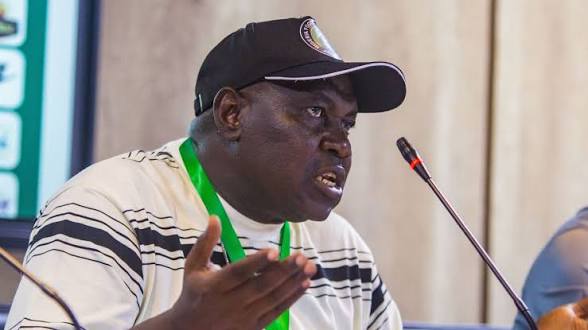
Nigeria sack Madugu after WAFCON exit, World Cup miss
The Nigeria Football Federation has dismissed Super Falcons coach Justine Madugu and his entire technical crew, a sweeping move that follows the team’s shock failure to qualify for the FIFA Women’s World Cup for the first time in their history.
The decision, announced on the federation’s official channels, ends Madugu’s brief but eventful spell in charge. Elevated from assistant to interim head coach after Randy Waldrum’s departure, he guided Nigeria to a record-extending 10th Women’s Africa Cup of Nations title and earned recognition from the Confederation of African Football as coach of the tournament. That triumph appeared to cement his status as the man to lead a new era for Africa’s most successful women’s side.
Instead, the Super Falcons’ fortunes collapsed at the subsequent WAFCON, which doubled as Africa’s qualifying route to the 2027 Women’s World Cup in Brazil. Nigeria failed to reach the semifinals and then lost 2-1 to South Africa in a playoff that would have secured a place in the intercontinental playoffs. The defeat snapped a proud run of appearances at every Women’s World Cup since 1991 and triggered a wave of criticism at home.
In response, the NFF has set up a fact-finding committee to probe what it called the “poor outings” of Nigeria’s national teams, with particular focus on the women’s side. NFF president Ibrahim Gusau tasked the panel with identifying both immediate and underlying causes of the decline and gave it two weeks to submit recommendations.
The committee is chaired by former NFF general secretary and 1993 FIFA Under-17 World Cup-winning coach Fanny Amun. Its members include ex-Super Falcons captain Desire Oparanozie, former Super Eagles midfielder Mutiu Adepoju, Nigeria Football Coaches Association president Ladan Bosso and former FIFA referee Alex Mana. Amun has pledged wide consultations, including taking submissions from the public, and described the assignment as a “national duty” that demands full commitment.
Yet the federation itself is under mounting scrutiny. A series of qualification failures across different national teams has fuelled debate within government circles over whether the current NFF leadership should remain in place ahead of scheduled elections in Lafia. Proposals reportedly under consideration include the installation of a FIFA-approved normalisation committee to run Nigerian football temporarily, a step that would require careful coordination with both FIFA and the Confederation of African Football to avoid sanctions for political interference.
.jpeg?alt=media&token=96b327a5-8e62-4ed1-a078-308aff149ed1)