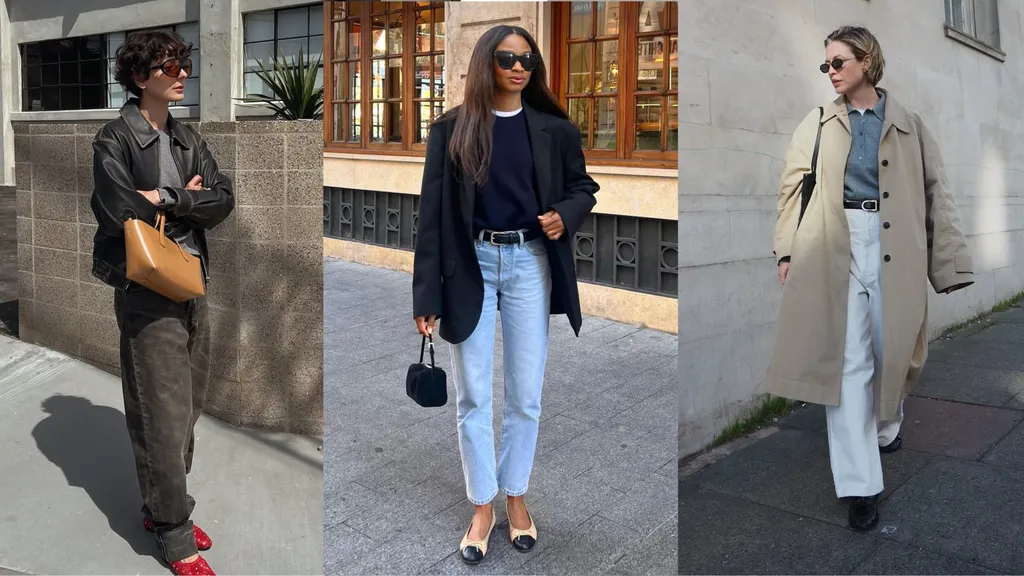
In contemporary wardrobes, jeans and flat shoes are high-frequency items, but their combinations are not always visually balanced. Stylist Jen Andrews-Cater applies a proportion-focused framework to determine which denim-and-flat pairings appear current and intentional. Her method can be summarized as managing visual weight, line, and exposure of the ankle and foot.
For loafers, which have a structured and tailored appearance, she recommends straight-leg or subtly cropped flare jeans. These cuts expose some ankle and align with the loafer’s formality and weight. Ultra-skinny jeans are excluded in this pairing because they can exaggerate the loafer’s bulk, creating a dated or disproportionate effect.
High-vamp ballet flats cover more of the foot and therefore read more refined than traditional low-cut ballet flats. To maintain a clean, streamlined look, Andrews-Cater pairs them with slim, ankle-grazing or softly tapered jeans. Excessively long or puddling hems are avoided because they obscure the shoe and reduce the intended refined effect.
Flat mules, with an open heel, visually lighten the lower leg. They are paired with relaxed straight-leg or gently wide jeans that skim the body rather than cling. This combination supports an easy, casual appearance. Heavy, stiff skinny jeans are not recommended, as they tend to break awkwardly at the ankle and conflict with the mule’s relaxed character.
Clogs introduce significant visual weight due to their chunky sole and overall volume. To balance this, Andrews-Cater selects full-length wide-leg or barrel jeans that provide comparable visual mass. Tight, cropped jeans are avoided because they can make the clogs appear disproportionately heavy, whereas added leg volume produces a more intentional and cohesive silhouette.
Almond-toe and pointed flats create a lengthening effect on the leg. To leverage this, she pairs them with soft, drapey wide-leg or straight jeans that maintain a clean, uninterrupted line. Overly cropped jeans are excluded in this context because they visually shorten the leg and counteract the elongating function of the shoe shape.
Across these five categories, the underlying principle is consistent: shoe shape and visual weight dictate the optimal denim cut. Sleeker shoes work effectively with looser denim, chunkier shoes require either structure or volume in the jeans, and more delicate flats perform best with precise, controlled hemlines. The emphasis is on proportion and balance rather than on transient trends.