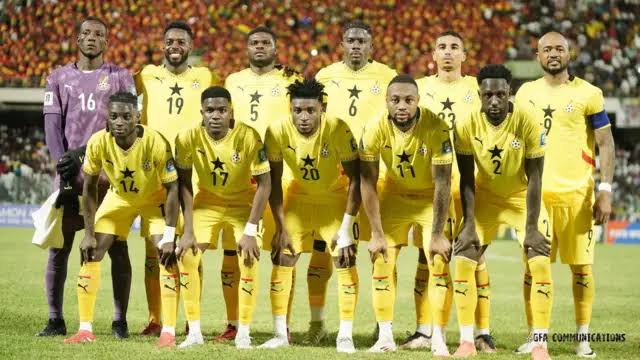
Ghana’s World Cup preparations have been significantly disrupted following the Ghana Football Association’s decision to terminate head coach Otto Addo’s contract 72 days before the team’s opening match.
The dismissal follows a sequence of four consecutive defeats in friendly matches, including a 2-1 loss to Germany in Stuttgart and a 5-1 defeat to Austria. These results have highlighted performance and tactical concerns during a critical phase of pre-tournament preparation.
In a short statement, the GFA confirmed the immediate end of Addo’s tenure without providing reasons for the decision or naming a successor. The lack of detail has drawn attention to the federation’s planning processes and raised questions about leadership stability so close to a major competition.
Addo was in his second spell in charge of Ghana. Borussia Dortmund had agreed to release him from his talent development role at the end of the season so he could assume full-time national team duties. In 2022, he served as interim coach, overseeing World Cup qualification and leading Ghana in Qatar, where the team recorded a win over South Korea but did not advance from the group stage.
Born in Hamburg, Addo had a notable playing career, including winning the Bundesliga with Borussia Dortmund and representing Ghana at the 2006 World Cup. His background in European football and his connection to both Germany and Ghana were viewed as useful in integrating domestic-based players with members of the Ghanaian diaspora.
Ghana has qualified for the World Cup for the fifth time and will compete in Group L against Croatia, England and Panama. The opening match against Panama in Toronto had been identified as a key opportunity to establish early momentum in the group.
The immediate priority for the GFA is to appoint a new head coach and assemble a technical team with limited lead time. The incoming staff will need to implement a coherent tactical approach, finalise squad selection and address confidence issues within a compressed preparation window. The timing of the change introduces additional operational and performance risk to Ghana’s World Cup campaign.