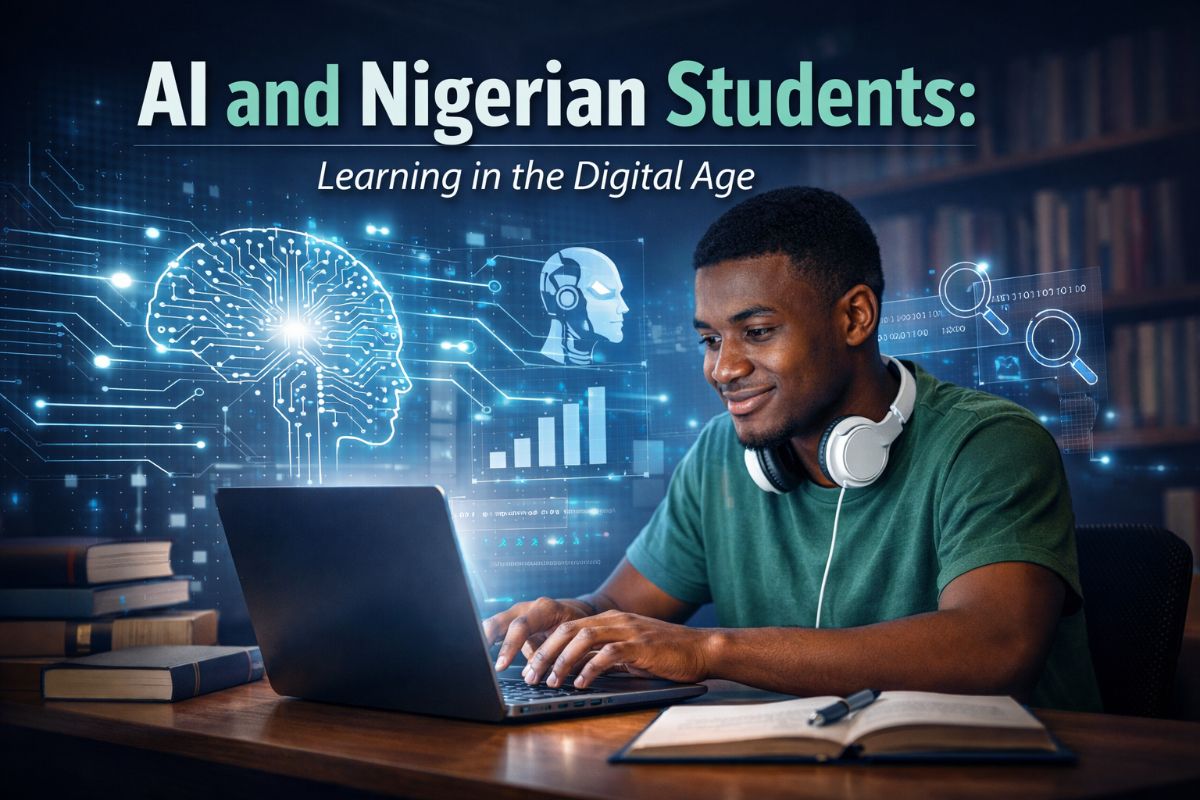
Artificial Intelligence (AI) is increasingly transforming academic research among Nigerian students, providing support in generating research ideas, summarizing study materials, and assisting with academic writing. With limited access to research resources and heavy academic workloads, many students are turning to AI-powered platforms to improve productivity and learning efficiency.
The United Nations Educational, Scientific and Cultural Organization (UNESCO) acknowledges the growing role of AI in education, noting that artificial intelligence “holds great promise for education, but only if it is deployed in a safe and ethical way.” UNESCO Director-General Audrey Azoulay also stresses that AI must support learning rather than replace human intellectual development.
Similarly, the World Economic Forum highlights that while AI enhances productivity, “creativity, contextual reasoning and ethical judgment are capabilities that no algorithm can fully replicate.” The statement reflects global concerns that students must maintain independent thinking despite technological assistance.
Many Nigerian students describe AI as a dependable academic assistant that helps simplify complex academic tasks. However, artificial intelligence pioneer Geoffrey Hinton warns that “any new technology, if it’s used by evil people, bad things can happen,” reinforcing concerns about academic misuse.
As Nigeria’s digital economy continues to expand, AI is expected to influence education and communication industries. Nevertheless, experts emphasize that while AI may help students complete assignments faster, it still cannot attend lectures or explain missed deadlines to Nigerian parents.