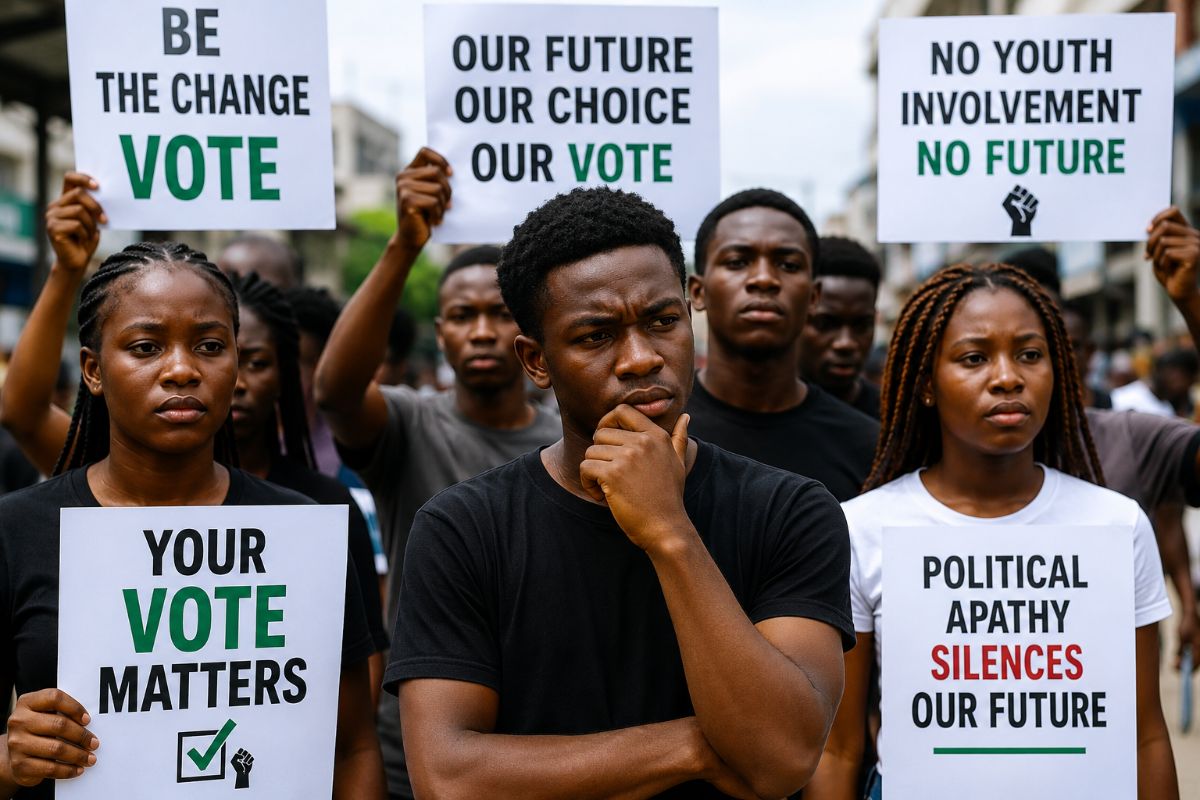
As Nigeria prepares for future elections, one important question continues to surface: Why are so many young people choosing to stay away from politics?
Nigeria has one of the youngest populations in the world. Young people make up a significant percentage of registered voters and are often the most vocal on social media whenever national issues arise. Yet, when it is time to register to vote, attend political meetings, or cast their ballots, many decide not to participate.
This growing lack of interest, known as political apathy, has become a serious concern.
For some youths, the reason is disappointment. They have watched elections come and go with little improvement in their daily lives. Campaign promises are often forgotten after the votes are counted, leaving many to believe that their participation makes little difference.
Others are discouraged by unemployment, economic hardship, and the rising cost of living. Their focus is on earning a living and supporting their families, leaving little time or energy to follow political developments. Some also worry about election-related violence, intimidation, or misinformation, which can make the political process feel unsafe or untrustworthy.
Social media has also changed how young people engage with politics. While online platforms have made it easier to discuss national issues, sharing opinions online is not the same as participating in the democratic process. Real change depends on informed citizens who vote, hold leaders accountable, and stay involved even after elections.
Despite these challenges, political participation remains important. Elections determine who makes decisions about education, employment, healthcare, security, infrastructure, and many other issues that directly affect young people. Choosing not to participate means allowing others to make those decisions on their behalf.
Political engagement is not limited to voting. It also includes staying informed, asking critical questions, promoting peaceful dialogue, challenging misinformation, participating in community discussions, and encouraging accountability from elected officials regardless of political party.
As another election season approaches, young Nigerians have an opportunity to reflect on the role they want to play in shaping the country's future. While frustration with the political system is understandable, lasting change is more likely when citizens remain informed, engaged, and committed to peaceful democratic participation.
The future of Nigeria will not be shaped by politicians alone. It will also be influenced by the choices made or not made, by its young people.
What do you think is the biggest reason for political apathy among Nigerian youths? How can more young people be encouraged to participate in the democratic process?