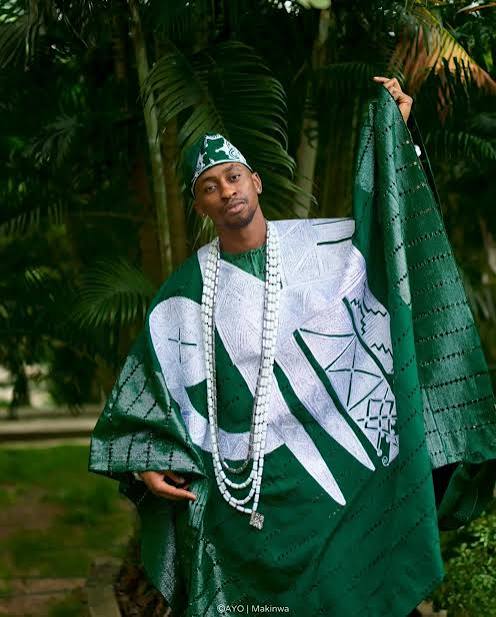
Within Nigeria’s current Africa Cup of Nations squad, Bright Osayi-Samuel has emerged as a key structural component despite not being among the most high-profile players. Originally developed as a winger, he is now operating as an all-action right-back and has become central to the team’s tactical framework in Morocco.
Osayi-Samuel started his fourth consecutive match as Nigeria beat Algeria 2-0 in Marrakech to reach the semifinals against hosts Morocco. While attacking players such as Akor Adams, Victor Osimhen and Ademola Lookman attract most of the attention, the stability and balance that enable this front line to function effectively are heavily influenced by Osayi-Samuel’s work on the right flank.
Born in Nigeria and raised in London from age 10, Osayi-Samuel progressed through Blackpool’s system and experienced consecutive relegations early in his career. He then moved to Queens Park Rangers in the Championship, where he played primarily as a direct, powerful winger. Across 103 appearances for QPR, he contributed to 21 goals. These numbers indicated usefulness but did not place him among the division’s most productive attacking players, especially when compared with contemporaries such as Jarrod Bowen, Michael Olise and Eberechi Eze, who converted strong Championship output into Premier League status.
In 2021, Osayi-Samuel signed a pre-contract with Fenerbahce and left QPR before his deal expired. This move to Istanbul marked a turning point in his role. At Fenerbahce, coach Vitor Pereira, operating with a 3-4-3 system, identified him as a candidate for a wing-back role. Pereira assessed that Osayi-Samuel’s pace, work rate and stamina could be more effectively utilised from a deeper starting position, provided he developed the necessary defensive fundamentals.
The positional change proved effective. Osayi-Samuel adapted to the demands of defending larger spaces, improving his timing in tackles, positional awareness and overall discipline. By the 2022-23 season, he had become a regular contributor as Fenerbahce won the Turkish Cup and challenged for the league title. His profile shifted from that of a raw, pace-driven winger to a modern full-back combining athleticism with tactical understanding.
This evolution significantly altered his status within the Nigeria national team. As a winger, he faced intense competition from a deep pool of attacking options. As a defender capable of both securing his flank and advancing with the ball, his value increased. He debuted for the Super Eagles in 2022 and was part of the squad at the previous Nations Cup in Ivory Coast, although Ola Aina was preferred at right wing-back in the final.
Aina’s hamstring injury before the current tournament removed Nigeria’s established first-choice right-back from contention. This created a vacancy that Osayi-Samuel, already tested in World Cup playoff matches, was well positioned to fill. Despite competition from Ryan Alebiosu of Blackburn Rovers, he has secured the starting role at right-back in Morocco.
Nigeria coach Eric Chelle has implemented a 4-4-2 diamond system, which places high physical and tactical demands on the full-backs. They must provide width in attack while maintaining defensive solidity. On the right side, Osayi-Samuel has been a central enabler of this structure.
In possession, he advances aggressively, either carrying the ball past opponents or pushing high to pin back the opposition full-back. This movement creates space inside for Nigeria’s forwards. His background as a winger allows him to operate comfortably in advanced zones, and he has averaged roughly one chance created per game at this tournament. Against Algeria, he recorded the highest number of successful dribbles on the pitch.
Opponents have responded by targeting him physically. In the quarterfinal, he was the most fouled player on the field, with five fouls committed against him as Rayan Aït-Nouri struggled to contain his forward runs. These fouls indicate the degree of disruption his movements cause to opposition defensive structures, often forcing defensive lines to shift and opening passing lanes for Nigeria’s attackers.
Defensively, the work done in Turkey is evident. Osayi-Samuel has averaged approximately 2.3 successful tackles per match and has won around 70 percent of his duels, suggesting reliability in one-on-one situations. Against Algeria, he effectively limited the influence of Farès Chaïbi, a player known for his creative threat. With Osayi-Samuel stabilising the right side, Nigeria’s back line has produced consecutive clean sheets, reducing pre-tournament concerns about defensive vulnerability.
He has acknowledged the intensity of scrutiny from Nigerian supporters and media, but his response has been performance-based rather than rhetorical. The defensive unit’s recent record, including holding an attack-oriented Algerian side to zero shots on target, functions as a measurable rebuttal to earlier criticism.
As Nigeria prepare to face Morocco with a place in the final at stake, public and media focus will likely remain on the forwards, particularly Adams, Osimhen and Lookman. However, the underlying mechanics of the team’s success are closely linked to Osayi-Samuel’s contribution. His overlapping runs, ball progression from deep and defensive consistency are integral to the effectiveness of Chelle’s diamond system.
From early struggles at Blackpool to positional reinvention at Fenerbahce and now a central role for Nigeria at AFCON, Osayi-Samuel’s career illustrates how role adaptation and tactical fit can significantly alter a player’s impact. In a competition often framed around star forwards and goal-scoring highlights, the available data and on-pitch evidence indicate that Nigeria’s current run is heavily supported by the output of their right-back.