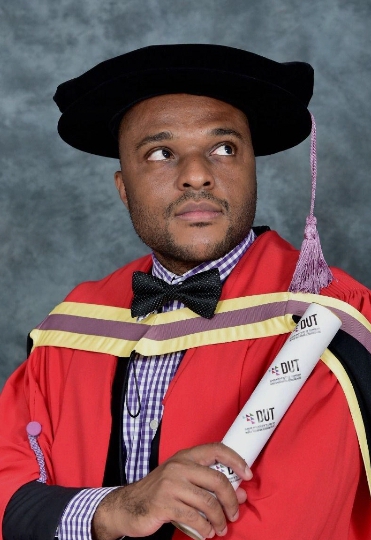
Dr. Ayodeji Amobonye Emmanuel: Nigeria’s Rising Biotechnology Star on the Global Scientific Stage
Dr. Ayodeji Amobonye Emmanuel is a Nigerian scientist whose work in biotechnology has earned him global recognition and helped put Nigeria firmly on the world science map. In 2025, he was named among the top two per cent of scientists in the world in a prestigious ranking published by Stanford University in collaboration with Elsevier, a major global academic publisher. This list highlights researchers whose work has had exceptional impact, meaning other scientists around the world cite and build on their research often.
Born in Owo, Ondo State, Nigeria, Dr. Amobonye’s academic journey began at home. He earned his first degree from the Federal University of Technology, Minna, and his Master’s degree at the Federal University of Technology, Akure, both in Nigeria. After completing his early studies, he went on to pursue a Ph.D. in Biotechnology at the Durban University of Technology in South Africa, where he also worked as a lecturer and researcher.
Today, Dr. Amobonye serves as a Research Fellow at the Kaunas University of Technology in Lithuania. His research spans important areas of biotechnology, including industrial biotechnology, environmental sustainability, and bioprocess development, fields that explore practical uses of biological systems to solve real-world problems such as waste management, sustainable industrial processes, and eco-friendly technologies.
What makes Dr. Amobonye’s story especially inspiring is not just the global accolade but also the path his career represents: a scientist trained in Nigeria who has risen to international influence through dedication, rigorous research, and deep commitment to scientific inquiry. His recognition among the world’s leading scientists, one of only a few hundred thousand featured from millions of researchers globally, shows that high-impact science can emerge from Nigerian foundations and contribute meaningfully to global knowledge.
Dr. Amobonye’s success has earned praise from Nigerian institutions and leaders alike, with organisations such as the Nigerians in Diaspora Commission (NiDCOM) celebrating him as a “beacon of excellence” and an inspiration for young scientists across the country. His journey continues to speak to the potential for Nigerian researchers, when given support, resources, and opportunities, to shape global science and address challenges that matter both at home and abroad.