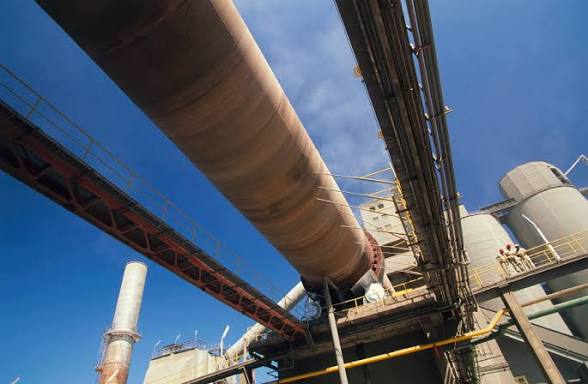
You’ve heard of hybrid cars. Now meet their industrial cousin: the hybrid cement and glass plant, where fossil flames share the job of heating with silent, invisible electric fields.
That is the vision behind NOC Energy, a French startup that says it can graft high-temperature electric heating onto some of the dirtiest, hardest-to-abate factories on earth. Instead of forcing cement and glass makers to abandon gas or coal overnight, NOC offers a way to “hybridize” their kilns, letting operators toggle between fossil fuels and electricity depending on cost and availability.
At the heart of the system is induction heating, a technology more familiar from high-end kitchen stoves than from smokestack industry. Copper coils wrapped around large ceramic vessels create oscillating magnetic fields when powered. Inside each vessel, thousands of steel spheres soak up that energy, their atoms vibrating until the balls glow hot.
Air pushed through the packed spheres emerges at temperatures up to 1,200 degrees Celsius, hot enough for key steps in cement and glass production. NOC is working toward 1,500 degrees, a threshold that would put almost the entire process within reach of electricity. Crucially, the copper coils themselves never see those extremes; buried under thick insulation, they stay near room temperature, avoiding the rapid burnout that plagues conventional resistive heaters at industrial heat levels.
That insulation does double duty as a thermal battery. Once charged, the hot spheres can hold usable heat for hours, allowing factories to soak up cheap renewable power when wind and solar are plentiful, then run on stored heat when electricity prices spike or grids are strained. If power becomes too expensive, operators can simply dial back the electric side and lean on their existing fossil systems.
NOC has tested a refrigerator-size pilot for 15,000 hours and built two larger demonstration units for a glass maker and a cement producer in France. If the technology scales, it could give heavy industry a flexible bridge away from fossil fuels, cutting emissions without demanding a single, risky leap into an all-electric future.
In an era of volatile energy prices and geopolitical shocks, the ability to switch fuels on the fly may prove as attractive as the climate benefits.




.jpeg?alt=media&token=ee50bc60-44ee-4299-a690-3803ae332172)