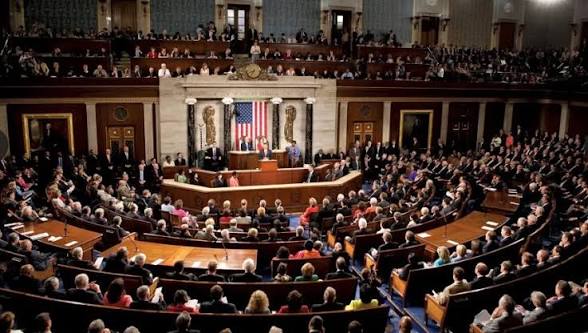
The United States House of Representatives has approved an amendment that would block all American assistance to Nigeria unless Washington certifies that Abuja is taking concrete steps to curb religious violence and prosecute offenders.
The measure, sponsored by Republican Congressman Gregory Steube of Florida, was attached to the State Department and foreign operations appropriations bill for the 2027 fiscal year. It was adopted by voice vote before the broader spending package narrowly passed the House along party lines.
The underlying bill had initially proposed freezing 50 percent of US funds earmarked for Nigeria until the Secretary of State confirms that the Nigerian government is effectively preventing and responding to attacks and holding perpetrators accountable. Steube’s amendment raises the stakes dramatically, mandating that 100 percent of assistance be withheld until those same conditions are met.
Announcing the outcome on X, Steube said his amendment was aimed squarely at what he described as the “slaughter of Christians” in Africa’s most populous nation. He argued that American taxpayers should not be compelled to support a government that, in his view, has failed to protect vulnerable communities from abductions, torture and killings.
On the House floor, Steube accused Nigerian authorities of presiding over a “horrific wave of violence” and said that limiting the penalty to half of US aid would amount to rewarding failure. He insisted the amendment does not introduce new benchmarks but “strengthens” existing ones by tying all assistance to measurable progress.
Beyond human rights concerns, Steube linked his proposal to broader debates over US fiscal policy, questioning why Washington should continue sending money abroad while grappling with a soaring national debt.
The amendment’s passage marks an escalation in congressional scrutiny of Nigeria’s human rights record, particularly regarding attacks on Christian communities in the country’s Middle Belt and northern regions. Rights groups and some US lawmakers have long accused Nigerian security forces of failing to prevent assaults by extremist groups and armed militias, allegations Nigerian officials routinely reject or downplay.
The House vote does not immediately alter US policy. The spending bill, including Steube’s amendment, must still be approved by the Senate and signed by the president before any aid suspension can take effect. The debate, however, underscores growing pressure in Washington to link foreign assistance more tightly to religious freedom and accountability for mass violence.