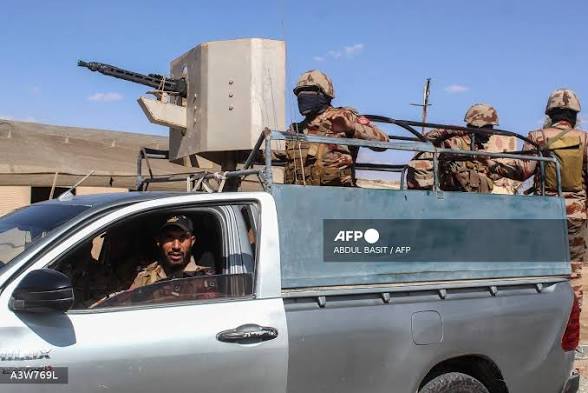
Pakistan’s leadership has doubled down on its pledge to crush militancy as a fragile ceasefire with Afghanistan approaches its deadline, raising fears of renewed cross-border violence once the guns are officially allowed to roar again.
The temporary truce, announced jointly by Islamabad and Kabul for the Eid al-Fitr holiday, paused weeks of escalating hostilities along one of the world’s most volatile frontiers. It followed a devastating Pakistani airstrike on Kabul that Afghan authorities say hit a drug rehabilitation centre and killed more than 400 people, one of the deadliest incidents since tensions flared earlier this year.
In a Pakistan Day message, Foreign Minister Ishaq Dar signalled that the pause in fighting had not altered Islamabad’s strategic calculus. He described Pakistan as “firmly committed to eradicating the menace of terrorism” and insisted that military operations conducted inside Afghanistan were aimed squarely at that objective.
Pakistan accuses the Taliban administration of sheltering militants responsible for a surge in attacks on its soil, particularly factions of the Tehreek-e-Taliban Pakistan and allied groups operating from Afghan territory. Afghan authorities reject the allegations, portraying Pakistan’s cross-border strikes as violations of sovereignty that inflict heavy civilian casualties and deepen public anger.
The uneasy calm has already been punctured. Afghan officials and a medical source reported that a mortar shell fired from Pakistan killed one person in the eastern province of Kunar, underscoring how quickly local skirmishes can threaten broader ceasefire understandings.
Prime Minister Shehbaz Sharif, in his own Pakistan Day address, framed recent operations beyond the border as a test of national will. Military action inside Afghanistan, he said, was “a symbol of our national resolve against terrorism,” vowing that Islamabad would not allow any harm to the country’s peace and security.
Diplomatic efforts to defuse the crisis have so far faltered. Mediation attempts by Gulf states and China earlier in the year failed to produce a lasting mechanism for managing cross-border threats or preventing miscalculation. With regional powers now preoccupied by other flashpoints, Pakistan and Afghanistan face the prospect of navigating their most dangerous standoff in years largely on their own.
As the ceasefire clock runs down, border communities brace for what may come next, caught between rival narratives of counterterrorism and sovereignty, and fearing that once Eid’s brief respite ends, the conflict could again spiral beyond control.