Senegal has adopted sweeping new asset disclosure rules for its top leaders, a move billed as a breakthrough for transparency but one that also lays bare a deepening power struggle at the heart of the state.
Under the law, the president, prime minister and speaker of the National Assembly must publicly declare their assets within three months of taking office and again within three months of leaving. The measure strengthens a disclosure regime in place since 2001, which had long been criticised by civil society groups as opaque and weakly enforced.
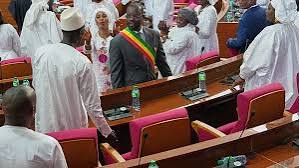
The bill sailed through the National Assembly with 133 votes in favour out of 165, thanks to the majority held by the ruling Pastef party. Yet the debate exposed sharp internal fractures, as some deputies warned the reform could be weaponised against President Bassirou Diomaye Faye himself.
The initiative originated with the parliamentary majority led by Ousmane Sonko, the former prime minister and Faye’s erstwhile ally, and initially targeted only the presidency. Lawmakers later broadened its scope to include the prime minister and the speaker, a change that now directly affects Sonko in his new role as head of parliament.
Justice Minister Moussa Sarr framed the law as a cornerstone of the new authorities’ pledge to clean up public life after more than a decade under former president Macky Sall. He argued that asset transparency should ultimately be embedded in a wider overhaul of Senegal’s institutions, ideally through a constitutional referendum.
The reform lands at a moment of open confrontation between Faye and Sonko, who rose to power on a shared anti-corruption, anti-establishment platform. Their partnership collapsed when Faye dismissed Sonko as prime minister, triggering a bitter public feud between rival camps that now accuse each other of betraying the promise of accountable government.
Sonko’s swift election as speaker of the National Assembly ensured he remained a central player in national politics, even as Faye announced plans for a constitutional referendum whose contours remain unclear. The new disclosure law, while popular with many transparency advocates, risks becoming another flashpoint in a rivalry that is reshaping Senegal’s political landscape.
For supporters of reform, the test will be less the symbolism of declarations than their enforcement: whether the new rules are applied consistently, audited rigorously and insulated from the factional battles now roiling the ruling camp.