Freedom After Fifty-Six Days: Agenda-Setting, Framing, and the Politics of Rescue in Nigeria’s Oyo School Kidnapping
By Salima Usman Sani
REG NO:U25MM1109
MCOM 110
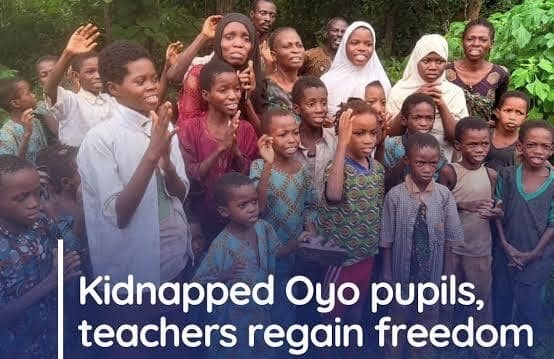
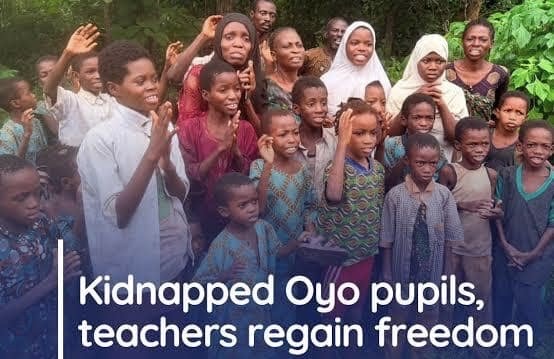
The rescue of schoolchildren and teachers abducted from three schools in Oriire Local Government Area of Oyo State after fifty-six days in captivity marked a significant moment in Nigeria’s ongoing struggle against kidnapping and insecurity. Announced by the presidency on July 10, 2026, the operation brought relief to families and communities while drawing attention to the growing threat of school-targeted violence beyond Nigeria’s northern regions. Although the victims’ safe return deserved celebration, the episode also provides an important case study for understanding how the media shape public perceptions of insecurity through agenda-setting, framing, and conflict-sensitive reporting.
The crisis began on May 15, 2026, when armed men simultaneously attacked Baptist Nursery and Primary School in Yawota, Community Grammar School in Esiele, and L.A. Primary School in Oriire Local Government Area. The coordinated nature of the assault distinguished it from isolated attacks and highlighted the increasing sophistication of kidnapping networks. During the incident, one teacher was killed, while another later died in captivity. Schools across neighbouring local government areas were temporarily closed, and teachers staged protests demanding stronger security for educational institutions.
The attack was especially significant because it occurred in Oyo State, a region that had previously been spared the wave of mass school abductions that have largely affected Nigeria’s North-West and North-Central zones. According to military authorities, the attackers were suspected members of the Ansaru terrorist group operating from the Old Oyo National Park. Their ability to strike multiple schools simultaneously challenged assumptions that school kidnappings were confined to particular regions and reinforced concerns about the changing geography of insecurity in Nigeria.
After more than a month of intelligence gathering and coordinated operations involving the military, police, the Department of State Services (DSS), and local vigilantes, security agencies announced the unconditional rescue of the victims. Officials maintained that no ransom was paid and stated that several suspects were arrested while others were neutralised during the operation. President Bola Tinubu commended the security agencies and directed that the rescued victims receive medical attention and psychosocial support. Governor Seyi Makinde also expressed relief and sympathy for the affected families.
Beyond the rescue itself, the Oriire case illustrates the continuing relevance of agenda-setting theory developed by Maxwell McCombs and Donald Shaw. The theory argues that while the media may not determine what people think, they significantly influence what people think about. For fifty-six days, the Oriire kidnapping remained in the news through reports of the abduction, rescue attempts, school closures, official briefings, and public protests. This sustained coverage ensured that school insecurity remained a prominent issue on the national agenda and encouraged public debate about the safety of schools across Nigeria.
The case also demonstrates what agenda-setting scholars describe as second-level agenda-setting, which focuses on the attributes emphasised within a story. Much of the coverage highlighted the determination of security agencies, the success of the intelligence-led rescue operation, and the presidency’s commitment to protecting citizens. While these were important aspects of the story, they often received greater prominence than questions surrounding the security failures that allowed three schools to be attacked simultaneously or the prolonged period the victims spent in captivity.
Robert Entman’s framing theory provides another useful lens for analysing the coverage. According to Entman, framing involves selecting certain aspects of reality and making them more salient in order to shape public understanding of an issue. In the Oriire case, the dominant frame presented the rescue as a victory for Nigeria’s security agencies. Government statements, military briefings, and much of the initial reporting celebrated the successful operation and the unconditional release of the victims. This “rescue triumph” frame understandably reflected national relief but also risked overshadowing deeper structural concerns.
Alternative frames were less visible during the initial reporting. A “systemic failure” frame would have examined why schools lacked adequate protection, why the initial rescue effort was disrupted by improvised explosive devices, and what lessons should be learned to prevent similar attacks. Such questions are essential because responsible journalism extends beyond reporting successful outcomes to examining the conditions that made the crisis possible in the first place.
The Oriire case also highlights the importance of peace journalism as proposed by Johan Galtung and later developed by Jake Lynch and Annabel McGoldrick. Peace journalism encourages reporting that is people-oriented, solution-oriented, and attentive to the underlying causes of conflict rather than focusing solely on official narratives or military victories. Much of the early reporting relied heavily on statements from government officials, military spokespersons, and political leaders. Although these sources were indispensable, the experiences of survivors, bereaved families, teachers, and local communities received comparatively limited attention during the initial news cycle.