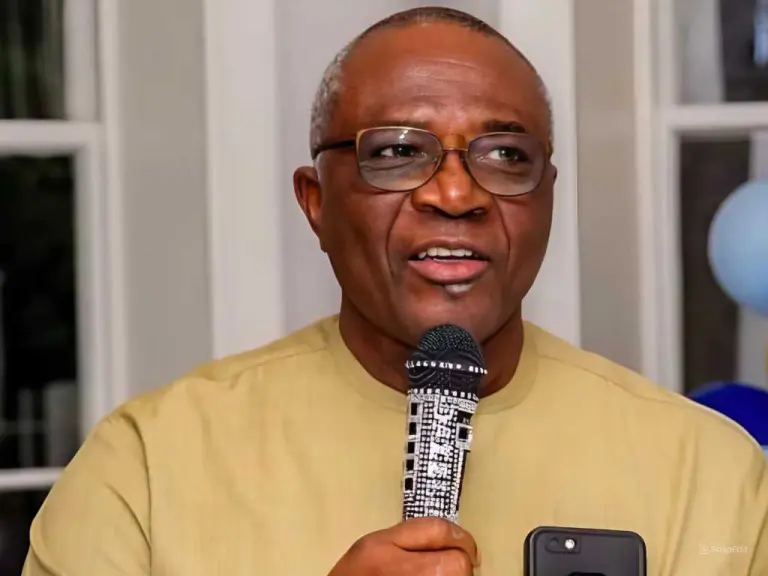
Bayo Onanuga, the Special Adviser to President Bola Tinubu on Information and Strategy, articulated the intricate challenges faced by the Nigerian government in its response to banditry and mass abductions. It is crucial to note that security agencies possess extensive intelligence concerning the identities and operational locations of the bandit groups responsible for egregious acts, including the recent assault on St. Mary’s Catholic School in Papiri, Niger State.
Onanuga, during his appearance on ARISE News's Prime Time program, highlighted that although security operatives are well-informed, their operational effectiveness is frequently compromised by the significant risk of collateral damage to innocent civilians. He stated, “The security people, they know all the bandits that are operating in that axis. They know them. They know where they operate.” This assertion reinforces the complexities involved in executing military interventions against these threats.
He further elucidated the government's prudent approach, clarifying that initiating airstrikes on identified bandit enclaves is not a matter of simplicity. “Our people are living around where they operate. So you can’t just go there. They need to be very careful that in the course of chasing these bandits, they don’t go and bomb innocent Nigerians,” he cautioned. This highlights the careful considerations that must be taken into account to prevent unintended consequences.
Onanuga referenced a concerning incident in Borno State, where military forces inadvertently targeted civilians due to erroneous intelligence. “Some years ago in Borno State, when the military thought they had the right satellite connection, they bombed the wrong people. They must avoid that kind of mistake,” he emphasized, illustrating the delicate balance security forces must strike during operations.
Additionally, Onanuga addressed the ongoing ambiguity surrounding the number of abducted students, noting that neither the school nor the Niger State chapter of the Christian Association of Nigeria has provided clear records. “As of now, the authorities are in the dark as to how many people are really missing. You said students are missing , let us have their names. Let us know what we are looking for,” he urged, highlighting the need for improved communication and cooperation from local entities.
Complicating the situation further, Onanuga mentioned that the principal of the school had reportedly “disappeared,” which has impeded efforts to confirm the status of the missing students. “For the security, they found it very strange that they are not cooperating. What is the agenda?” he questioned, reflecting frustration over the apparent lack of transparency from local officials.
He elaborated on the tactical reasons why security forces hesitate to conduct immediate assaults on bandit camps post-abduction. “What sometimes restrains them from going after them is the risk of collateral damage. They go about abducting our people and use them as a shield so that they will not be attacked,” he explained, underscoring the operational challenges faced by military personnel.
Onanuga noted that bandits are acutely aware of the consequences of resisting governmental authority. “They know that if they keep those people and refuse to release them, the next thing will be for the government to embark on kinetic action and attack their base,” he stated, indicating the manipulative strategies employed by these groups to leverage their position.
In light of the President's recent directive to reassign officers from VIP protection to frontline duties, Onanuga expressed optimism that this strategic resource allocation would enhance security in vulnerable regions. “I read today about 100,000 policemen guarding VIPs. If you share them out to vulnerable areas, that will make a lot of difference,” he asserted, advocating for a more judicious deployment of law enforcement resources.
In response to criticism from church leaders regarding the government's handling of the security crisis, Onanuga reaffirmed the administration's commitment to addressing these issues. “This government has never denied that Nigerians are being killed. We know we have problems, but we are making efforts to ensure that we stem all these things,” he stated, emphasizing the government’s acknowledgment of the severity of the situation.
Looking forward, Onanuga indicated that President Tinubu is expected to address the nation soon, following ongoing consultations regarding security measures. “I think he will do so very soon,” he concluded, leaving the public anticipating further updates on the government’s strategy to combat banditry and safeguard its citizens