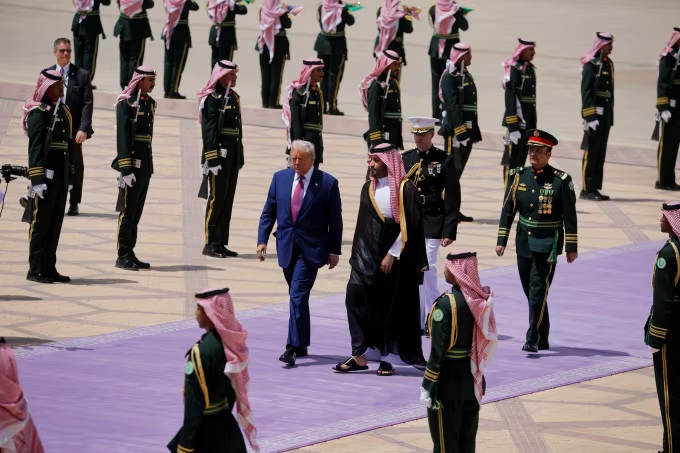
For decades, leaders of Arab nations in the Persian Gulf considered their ties with the United States a vital strategic alliance. However, Donald Trump often framed the relationship in more transactional terms.
In 2018, Trump remarked that Saudi Arabia depended heavily on American protection, suggesting the kingdom would struggle to survive without U.S. support and should therefore pay more for its defense.
A year later, Saudi Arabia experienced one of the most significant attacks on its territory in decades when major oil facilities were targeted, temporarily disrupting about half of its crude oil production and causing global oil prices to spike. Although Washington blamed Iran and condemned the assault, Gulf nations were left questioning how far the U.S. would go to defend them against Tehran.
By the time Trump returned for a second term, Gulf leaders had adjusted their expectations. While Gulf countries committed trillions of dollars in investments to the American economy, Trump selected the region for his first official foreign visit. During a stop in Doha, Qatar, he reaffirmed America’s commitment to protecting its Gulf partners.
That promise came under intense scrutiny this year when the United States, alongside Israel, launched military operations against Iran. The conflict triggered strong retaliatory attacks across the Gulf, forcing regional governments to once again reassess the meaning and reliability of American security guarantees.
This week, U.S. Secretary of State Marco Rubio visited the region to reassure Gulf states that Washington remains committed to their security. However, many Gulf leaders are now more concerned about whether the emerging arrangement with Iran will ultimately improve or worsen their security situation.
According to Hasan Alhasan, a senior fellow at the International Institute for Strategic Studies (IISS), the conflict marks a major setback for the Gulf’s security framework. He argues that growing U.S. disengagement from the region and increased economic opportunities for Iran could strengthen Tehran’s influence.
Even so, Alhasan noted that Gulf states have supported efforts toward an Iran-U.S. ceasefire, believing that despite its shortcomings, a negotiated agreement remains preferable to the risks and devastation of a broader regional war.