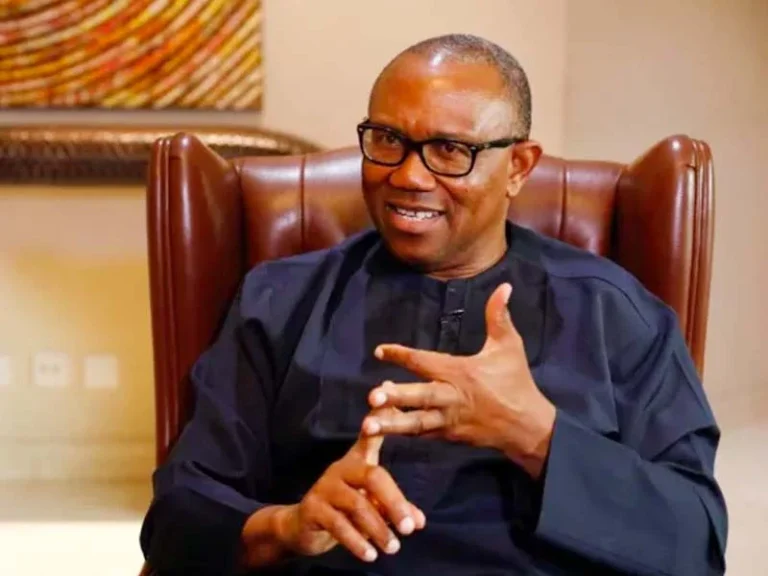
The Presidency has dismissed calls by Nigeria Democratic Congress presidential candidate Peter Obi for President Bola Tinubu to resign, describing the demand as “childish, hollow and an unworthy distraction.”
In a statement issued by the Special Adviser to the President on Information and Strategy, Bayo Onanuga, the Presidency accused Obi of attempting to delegitimise recent electoral gains by the All Progressives Congress, including the Ekiti governorship poll and several senatorial by-elections.
Onanuga faulted Obi’s comparison of Tinubu with British Prime Minister Keir Starmer, who announced his intention to step down, saying the analogy betrayed “a misunderstanding of Nigeria’s constitutional architecture.” He stressed that Nigeria operates a presidential system with a fixed four-year mandate, unlike the UK’s parliamentary model.
The Presidency rejected Obi’s assertion that Nigeria is in its “worst possible condition,” insisting that available data and international assessments point to a different reality. It cited continuous GDP growth since Tinubu assumed office, consistent trade surpluses, foreign reserves above $50bn and a rebound in oil production from under one million barrels per day to about 1.8 million.
According to the statement, federation revenue is projected to exceed N30tn this year, compared with N7.7tn in 2022, with N15.7tn already collected by May. It also pointed to a surging stock market, claiming the All-Share Index has climbed from around 50,000 to over 250,000, boosting the portfolios of millions of local investors. The Presidency further asserted that the naira has stabilised and that foreign direct and portfolio inflows are at record levels, particularly in oil and gas.
On security, the Presidency said more than 15,000 terrorists have been taken off the battlefield, hundreds of hostages rescued in the North-East and North-West, and several high-profile insurgent leaders neutralised, aided by foreign partners. It argued that Tinubu has expanded investments in security technology, including drones, and created the office of Special Adviser on Homeland Security.
It also highlighted what it called an under-reported achievement: three academic years without strikes by major university unions, which it framed as fulfilment of Tinubu’s pledge that a four-year degree would no longer stretch indefinitely.
The statement attacked Obi’s own record as Anambra governor, branding him “a colossal failure” on security, and accused him of misquoting Tinubu’s campaign remarks on electricity. It said Tinubu never promised 24-hour power but pledged to end estimated billing and expand access, citing the signing of the Electricity Act and the rollout of millions of prepaid meters and off-grid solar projects.
While conceding that the cost-of-living crisis remains severe, the Presidency partly blamed global shocks, including conflicts in the Middle East and disruptions to key shipping routes, which it said have driven up commodity prices just as domestic inflation was beginning to ease.
Obi, who finished third in the 2023 presidential election on the Labour Party platform before defecting to the NDC and securing its 2027 ticket, had said his call for Tinubu’s resignation was inspired by Starmer’s decision to step aside in the UK and his own reflections on how successful nations respond to governance failures.