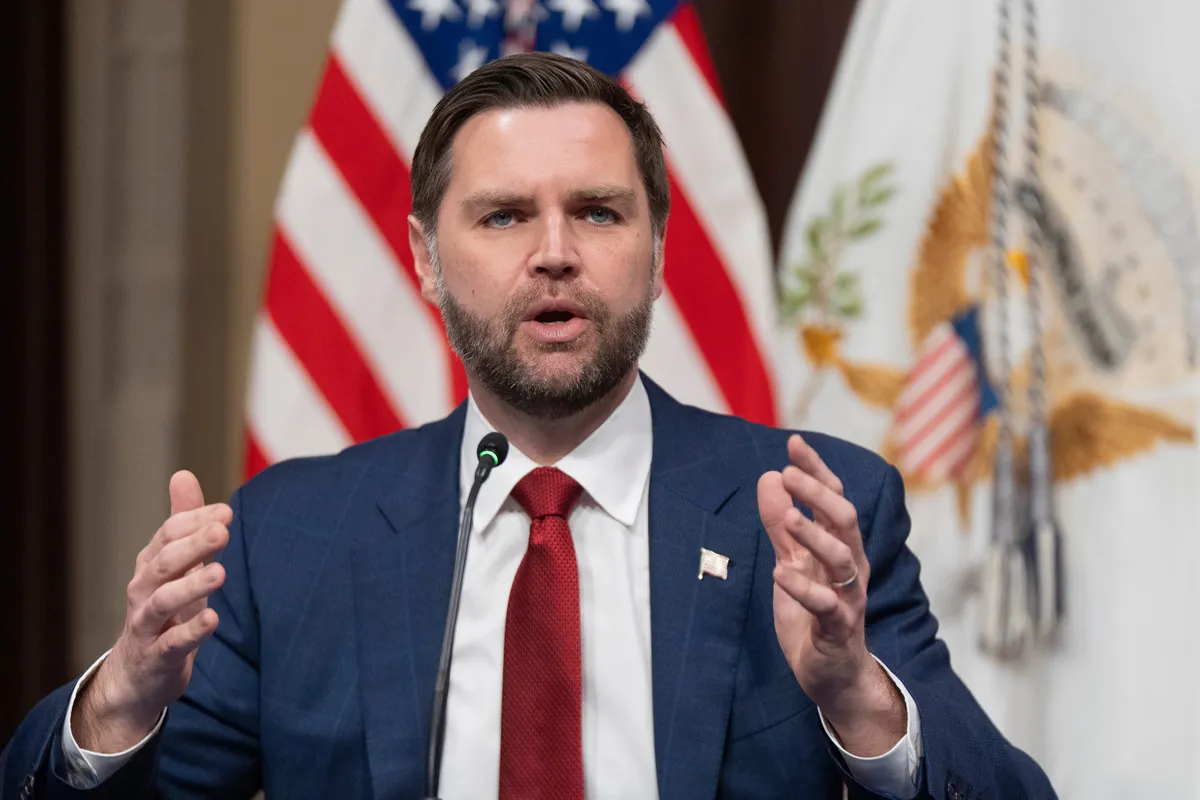
Vice President, JD Vance said on Saturday that the United States has achieved most of its military objectives in Iran and plans to leave "soon," even as Tehran publicly denies that any meaningful peace negotiations are underway, one month into the conflict that has roiled global energy markets. Speaking in an interview with conservative podcaster Benny Johnson, Vance acknowledged the war's economic toll but framed it as fleeting. "This is a very, very temporary reaction to what is ultimately going to be a short-term conflict," he said, referring to soaring energy prices caused by the near-total closure of the Strait of Hormuz. He added that President Trump "has been very clear" the administration has no interest in a prolonged presence: “We're not interested in being in Iran a year down the road, two years down the road. We're taking care of business, we're going to be out of there soon, and gas prices are going to come back down.” Yet Vance also signaled that the campaign is not over, he said. “We need to neuter them for a very, very long time, and that's the purpose.”
A DIPLOMATIC IMPASSE
The upbeat tone from Washington stands in sharp contrast to signals from Tehran. Iranian Foreign Minister Abbas Araghchi said this week that Iran "does not intend" to negotiate with the United States, telling state media that receiving proposals through intermediaries "does not imply negotiations with the US". Iranian state media earlier reported that Tehran rejected a 15-point US ceasefire proposal, calling it "excessive" and "deceptive," and laid out five conditions of its own for ending hostilities, including recognition of Iranian sovereignty over the Strait of Hormuz and reparations. President Trump on Thursday postponed planned strikes on Iranian power plants until April 6, citing progress in talks, after previously threatening to "obliterate" the facilities if Iran did not reopen the strait. Trump has also named Vance as lead negotiator alongside special envoy Steve Witkoff and Jared Kushner, with administration officials telling Axios that Vance's known skepticism of prolonged foreign conflicts makes him a more credible interlocutor for Iran.
THE CLOCK ON OIL
The diplomatic maneuvering unfolds against a tightening economic reality. The Strait of Hormuz, which carries roughly 20 percent of global seaborne oil trade, has been effectively closed to most commercial traffic since early March. Oil prices have surged 40 to 50 percent since the US-Israeli campaign began on February 28, and Iran has maintained a selective blockade that allows its own exports while blocking vessels linked to what it calls "aggressor nations". Energy analysts and corporate executives warn that the window to avert a broader crisis is narrowing. CNBC reported that if the strait is not reopened by mid-April, countries including India, Japan, and South Korea could face shortages severe enough to force cuts in industrial production. "If there's no resolution, no actionable plan, or even a sense of optimism about reopening the Strait, then we could be facing an energy crisis", energy analyst John Kilduff told CNBC.