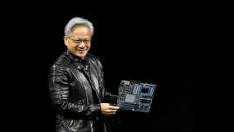
Nvidia’s GTC 2026 keynote from CEO Jensen Huang is set to be the centerpiece of the company’s annual GPU Technology Conference in San Jose, California. The address will run for about two hours and can be watched either in person at the SAP Center or via a livestream on Nvidia’s official GTC event site, where registration is typically free for virtual attendees. Once registered, viewers can access the keynote stream and most major sessions through the conference dashboard.
GTC has evolved from a graphics-focused gathering into one of the most closely watched events in artificial intelligence and accelerated computing. Huang is expected to use the keynote to outline Nvidia’s roadmap for AI infrastructure, data center platforms, and next-generation software tools that power everything from cloud services to edge devices.
A major focus this year is anticipated to be AI agents and enterprise software. Industry reports suggest Nvidia is preparing an open source platform, reportedly called NemoClaw, aimed at helping companies build and deploy autonomous AI agents that can handle complex, multistep workflows. Such a platform would deepen Nvidia’s role higher up the software stack, complementing its CUDA ecosystem and competing more directly with offerings from leading AI model providers.
On the hardware front, attention is on a rumored new chip optimized for AI inference. While Nvidia already dominates the training market for large models, inference — the stage where models generate answers, recommendations, or decisions — is increasingly where costs and performance constraints bite. A dedicated inference processor would be designed to deliver lower latency and better energy efficiency, countering custom silicon from hyperscalers like Google and Amazon and reinforcing Nvidia’s position in cloud and on-premises deployments.
GTC 2026 will also spotlight cross-industry applications. Sessions and demos are expected to show how Nvidia’s platforms are being used in healthcare diagnostics, robotics, industrial automation, and autonomous vehicles, often in partnership with major OEMs, research institutions, and cloud providers. These showcases typically serve as proof points for Nvidia’s claim that accelerated computing is becoming the default architecture for modern workloads.
Investors and developers will be watching closely for updates on Nvidia’s collaboration with inference specialist Groq, whose technology Nvidia reportedly licensed in a multibillion-dollar deal. Details on how Groq’s team and architecture are being integrated into Nvidia’s product stack could signal how aggressively the company plans to push into ultra-low-latency AI services.