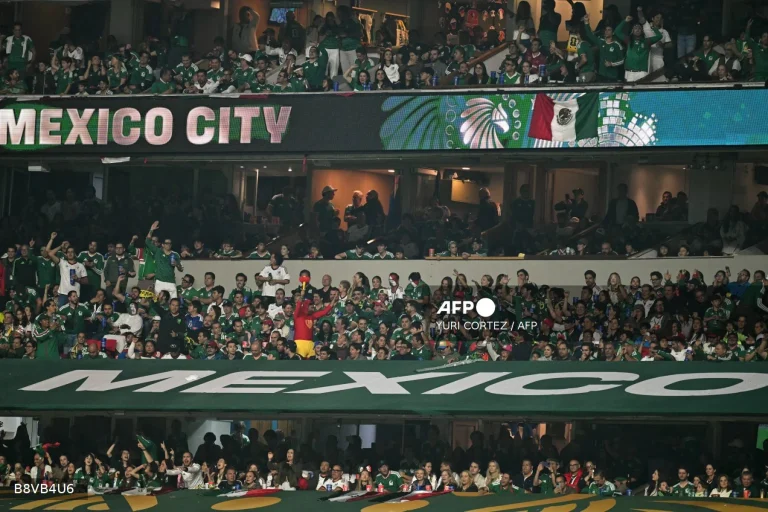
What began as a night of unrestrained joy in Mexico City ended in tragedy when two people died during massive street celebrations marking Mexico’s progression at the 2026 World Cup.
City authorities confirmed that a 19-year-old woman and a 44-year-old man died of asphyxiation amid the crush of jubilant fans who flooded central avenues after Mexico’s victory over Ecuador. The win secured the national team’s first World Cup knockout-stage triumph since 1986 and sent the co-hosts into the round of 16, unleashing an outpouring of emotion in the capital.
According to the city government, more than a million people poured into the streets, converging in particular around the iconic Angel of Independence monument, a traditional focal point for sporting celebrations. Witnesses described scenes of packed sidewalks, gridlocked traffic, and crowds so dense that movement became difficult for long stretches of the night.
The city’s health ministry reported that emergency services responded to multiple calls related to fainting, breathing difficulties, and minor injuries linked to overcrowding. The two victims were pronounced dead after attempts at resuscitation failed. Officials said both deaths were consistent with asphyxiation in an overcrowded environment.
Local media have reported a possible third fatality connected to the celebrations, but authorities have not confirmed that account. Investigators are reviewing security camera footage and emergency response logs to reconstruct the sequence of events and determine whether crowd-control failures contributed to the deaths.
Public safety experts in Mexico have long warned that the capital’s spontaneous mass gatherings, especially around major sporting events, can quickly overwhelm infrastructure and policing plans. The scale of Wednesday’s turnout, fueled by decades of pent-up frustration over Mexico’s World Cup record, appears to have exceeded expectations even in a city accustomed to large demonstrations and festivities.
City officials said they would reassess security and crowd-management protocols for future World Cup matches, including tighter control of access points around major landmarks, clearer evacuation routes, and increased deployment of medical teams on the ground.
As the national team prepares for its next match, the mood in Mexico City is a mix of pride and mourning. The victory that was supposed to unite the country in celebration has instead highlighted the thin line between collective euphoria and deadly risk when vast crowds gather with little room to breathe.