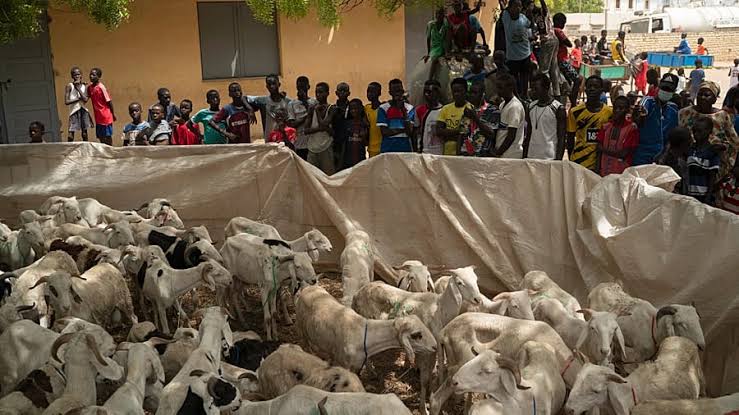
In Dakar’s sprawling livestock markets, the approach of Tabaski is usually marked by noise, bargaining and a sea of sheep. This year, the pens are thinner, the mood more anxious and the prices sharply higher, as conflict in neighbouring Mali chokes off a vital supply route.
Senegal relies heavily on Malian herds to meet the huge spike in demand for sheep ahead of the Eid al-Adha feast, known locally as Tabaski. Traders and breeders say that pipeline has been badly disrupted by a jihadist blockade in central and southern Mali, where armed groups have attacked roads, burned vehicles and intimidated transporters.
Seller Djiby Sow, who normally travels regularly to Mali to buy animals, said his last trip convinced him to stop for now. He described roadblocks, threats from fighters and long stretches of deserted highway where convoys once moved freely with livestock. “Vehicles can neither enter nor leave,” he said, adding that many Malian suppliers are now unwilling to risk the journey.
The impact is visible in Senegal’s markets. Buyers complain that prices, which typically rise only in the final days before Tabaski, have jumped weeks earlier. Animals that sold for about 150,000 CFA francs last year are now being offered at around 250,000 CFA francs, putting the traditional sacrificial sheep beyond the reach of many low and middle-income families.
Market-goer Mamadou Mademba Seck said households are being forced to choose between buying a smaller, thinner animal or abandoning the purchase altogether. Some families are reportedly pooling resources to share a single sheep, while others are turning to credit or informal loans.
Behind the price shock lies a surge in transport costs. Hauliers operating between Mali and Senegal, as well as within Mali itself, report that the cost of moving one animal has leapt from roughly 2,500–2,750 CFA francs to as high as 15,000–18,000 CFA francs. Many drivers now demand hazard premiums or refuse to travel at all, deepening shortages in both Bamako and Dakar.
Ismaila Sow, president of the National Council of the Senegalese Breeders Association, warned that the crisis could have lasting effects. Higher feed prices, insecurity on transhumance routes and expensive transport, he said, risk pushing up meat prices well beyond the Tabaski period and undermining local production.
In Mali, the blockade is compounding a broader humanitarian strain, with families cancelling holiday travel, enduring power cuts and facing rising food costs. For many across the two countries, a festival meant to symbolise sacrifice, solidarity and abundance is instead becoming a stark reminder of economic fragility and regional insecurity.