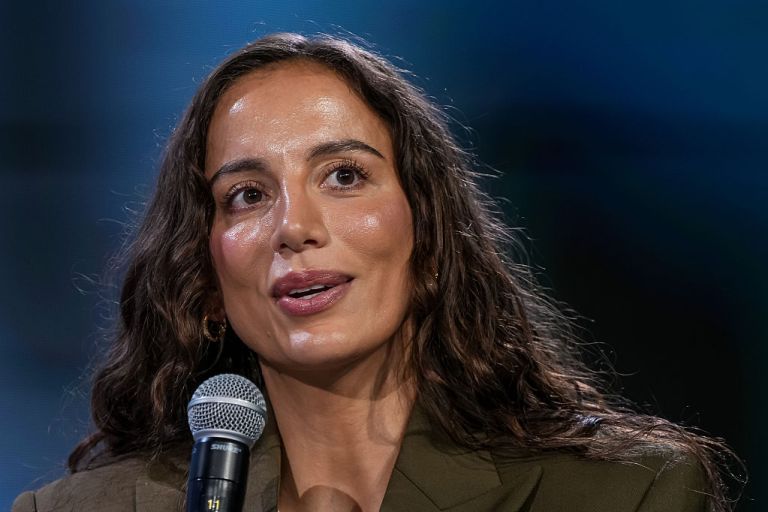
Mira Murati has never chased the limelight. As chief technology officer at OpenAI, she helped steer some of the most influential AI systems on the planet while rarely becoming their public face. Since leaving to found her own company, Thinking Machines Lab, she has been even more elusive. That is why her recent sit-down with Bloomberg in San Francisco, her first major interview in well over a year, landed with unusual weight in the tight-knit world of frontier AI.
Thinking Machines has spent its early life in deliberate semi-stealth, raising money, recruiting researchers, and quietly releasing Tinker, an API for fine-tuning open-source models. In the same period, rivals have dominated the narrative: OpenAI’s every move is scrutinized, Anthropic has become a magnet for both talent and capital, and Elon Musk’s xAI has been folded into SpaceX, amplifying its profile. In such a crowded field, silence can start to look like absence.
Murati used the interview to signal that Thinking Machines is ready to be noticed, but on its own terms. She outlined a new class of “interaction models” designed to move beyond the prompt-and-response pattern that defines most AI tools. These systems, she said, continuously ingest audio, text, and video in slices as short as 200 milliseconds, allowing them to track interruptions, hesitations, and mid-sentence course corrections in something close to real time. It is an attempt to make machines feel less like search engines and more like conversational partners. Yet she was explicit that this is an early step, declining to offer timelines or product specifics.
The conversation inevitably turned to the week that thrust her into global headlines: the brief period when OpenAI’s board ousted Sam Altman and installed Murati as interim chief executive. Inside the company, the episode is remembered as “the blip.” Murati described her choices during those days as guided by a single priority, protecting the mission and the team, and argued that without that focus OpenAI might have imploded. Still, she conceded that moral clarity in the moment did not guarantee good outcomes, and said she now wishes she had pushed harder for information, planning, and transparency.
Pressed on whether she still trusts Altman, Murati declined to answer directly, pivoting instead to a broader concern: that too much power over world-shaping technology rests with too few people, and that the industry has lavished attention on the virtues of leaders while neglecting the design of guardrails. Good intentions, she suggested, are no substitute for governance.
Murati also brushed aside speculation about recent high-profile departures from Thinking Machines, framing them as the inevitable turbulence of building a frontier lab at speed. Compensation packages may grab headlines, she said, but they rarely tell the whole story of why people come or go. Her own motivation, she added wryly, is not to “kill the competitor” but to build systems that justify their impact on society.
On the future of AI, Murati rejected both doom and inevitabilist optimism. The trajectory is still malleable, she argued, and the choices made in this formative period will determine whether AI amplifies human agency or erodes it. What worries her most is not a specific catastrophe but the possibility that humans cede control too quickly. Take your hands off the wheel now, she warned, and the destination will almost certainly be somewhere you did not intend to go.


.jpeg?alt=media&token=96b327a5-8e62-4ed1-a078-308aff149ed1)