For the past few weeks, football has given the world something to talk about.
Countries that may disagree politically stood together in stadiums. Fans travelled across borders to support their teams. Families gathered around television screens. Businesses prepared for increased activity. And millions of people experienced the highs and lows that come with supporting a national team.
But now that the 2026 FIFA World Cup is over, there is a bigger question worth asking:
What did this World Cup teach us about the world beyond football?
The answer goes far beyond who won the trophy.
A Bigger World Cup Meant a Bigger Global Conversation
The 2026 World Cup was historic before a ball was even kicked.
It was the first FIFA World Cup to feature 48 teams, expanding from the previous 32-team format. It also became the first World Cup hosted across three countries—Canada, Mexico and the United States—with matches played across 16 host cities. The tournament featured 104 matches.
That expansion meant more countries had the opportunity to participate on football's biggest stage.
For many nations, qualifying for the World Cup is more than a sporting achievement. It is an opportunity to put their country in front of a global audience.
This is particularly significant for countries whose stories are often overlooked internationally.
When a team walks onto the World Cup stage, it carries more than 11 players.
It carries a flag.
A culture.
A history.
And the hopes of millions of people.
Football Can Cross Borders That Politics Cannot
The world is currently dealing with political disagreements, conflicts, economic uncertainty and social divisions.
Yet, during the World Cup, people from different backgrounds gathered in the same places to celebrate football.
That does not mean sport can solve political problems. It cannot.
But football creates something valuable: human connection.
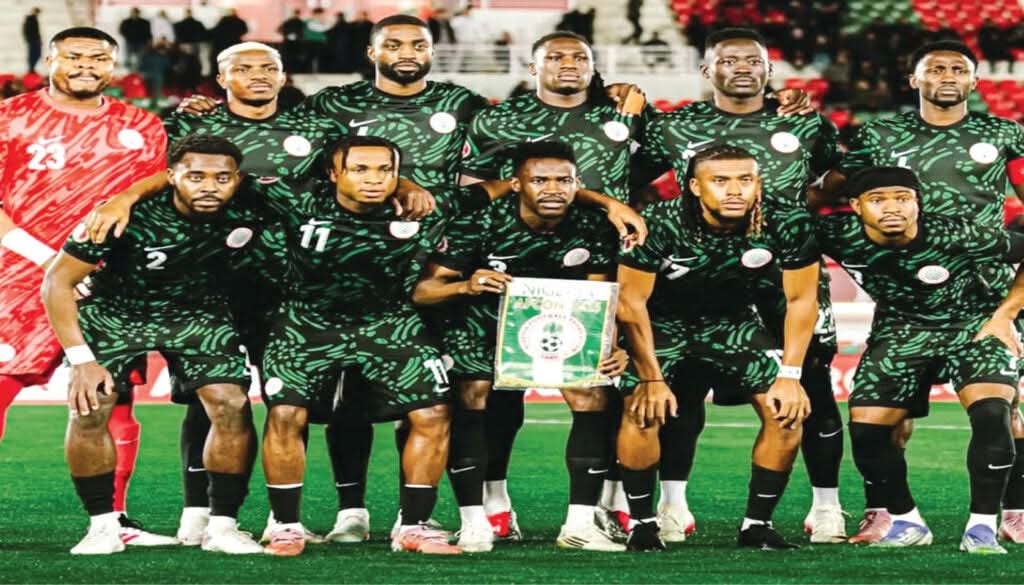
A Spanish fan can celebrate alongside an Argentine fan. A Nigerian can passionately support a team from another continent. Someone who knows nothing about another country's politics may still know its football stars.
For a few hours, people have something in common.
That is one reason major sporting events matter.
They create opportunities for people to see one another not simply as citizens of different countries, but as human beings with shared interests and emotions.
The 2026 Final Created a New Chapter in Football History
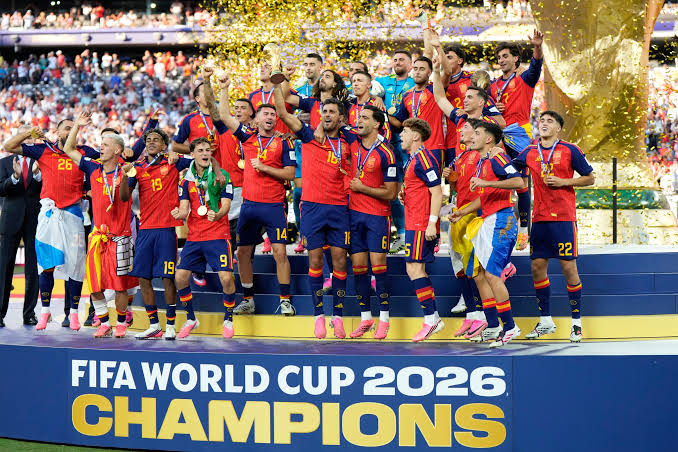
The tournament ended with a dramatic final between Spain and Argentina.
Spain defeated the defending champions 1–0 after extra time, with Ferran Torres scoring in the 106th minute. The victory gave Spain its second men's World Cup title.
The final also represented a meeting between different generations of football.
Argentina arrived as defending champions after their victory at the 2022 World Cup, while Lionel Messi, at 39, was playing in what could be his final World Cup.
On the other side was a Spanish side led by a younger generation of players, including Lamine Yamal.
The moment was symbolic.
Football, like society, is constantly moving from one generation to another.
One generation eventually steps aside, and another takes its place.
The World Cup Is Also Big Business
It is easy to focus on the football and forget the enormous economic machine behind the tournament.
The 2026 competition featured a record 48 teams and a record FIFA prize pool of $871 million. The eventual champions, Spain, were set to receive $51 million, while the runners-up received $34 million. Every participating team was guaranteed at least $12.5 million, according to AP's reporting on FIFA's prize structure.
But the financial impact goes beyond prize money.
Major tournaments create opportunities for hotels, restaurants, transport companies, broadcasters, security firms, tourism businesses and retailers.
Thousands of visitors travel.
Businesses receive customers.
Cities gain international exposure.
The World Cup therefore becomes an economic event as much as a sporting one.
But there is an important question that every host country should ask:
Who benefits the most from hosting a major tournament?
Do ordinary residents see meaningful improvements in their communities?
Do local businesses benefit?
Does the infrastructure built for the tournament continue serving citizens after the final whistle?
These are questions worth asking whenever governments invest public resources in major sporting events.
The Price of Being a Fan
The World Cup also highlighted another reality: global football can be incredibly expensive.
For some fans, attending a match is a once-in-a-lifetime experience.
But ticket prices, travel, accommodation and transportation can put the event out of reach for many ordinary supporters.
At one point during the 2026 tournament, AP reported that four tickets listed on FIFA's resale platform for the final were priced at nearly $2.3 million each. That was an extreme resale example rather than a standard ticket price, but it illustrated the extraordinary demand surrounding the biggest match in world football.
This raises a broader question about modern sports:
Is football becoming a game for everyone to watch but only a few to experience in person?
The global popularity of football is built on ordinary fans.
The child watching from a small room.
The family gathering around a television.
The supporter saving money to buy a jersey.
The group of friends watching a match together.
The sport should never lose sight of the people who make it what it is.
Football Also Shows the Power of Youth
One of the most interesting stories of modern football is the emergence of young players on the biggest stages.
The 2026 World Cup continued that pattern.
Lamine Yamal's presence in Spain's historic campaign represented more than individual talent. It showed how quickly football can move from one generation to another.
Young players today are growing up in a completely different environment from previous generations.
They are developing their careers in an era of social media, global streaming and instant worldwide attention.
A talented teenager in one country can become a global celebrity almost overnight.
That presents opportunities—but also enormous pressure.
Young athletes are expected to perform, represent their countries and handle criticism from millions of people online.
The lesson goes beyond football.
Today's young generation is growing up under unprecedented levels of public scrutiny.
Whether in sports, entertainment, business or politics, young people are entering the global stage earlier than ever.
Africa's Place in the Global Football Story
For Africa, football remains one of the continent's most powerful cultural exports.
African players are central figures at some of the world's biggest clubs, while national teams continue to attract enormous support.
The 2026 tournament also featured several African teams among the 48 finalists, including Algeria, Cabo Verde, DR Congo, Côte d'Ivoire, Egypt, Ghana, Morocco, Senegal, South Africa and Tunisia.
But there is a bigger conversation here.
Africa has enormous football talent, yet many young people still lack access to quality facilities, coaching and sustainable pathways into professional sport.
Football can create opportunities, but it cannot be the only opportunity available to young people.
Governments and private organisations must also invest in education, technology, entrepreneurship and other sectors.
A young African should be able to dream of becoming a footballer.
But they should also be able to dream of becoming an engineer, journalist, scientist, entrepreneur or filmmaker—and have a realistic path toward achieving that dream.
The World Cup Cannot Solve the World's Problems
There is a temptation to romanticise sport as a force that can unite everyone.
But we should be realistic.
A football tournament cannot end a war.
It cannot eliminate poverty.
It cannot solve political disagreements.
It cannot fix global inequality.
However, it can remind us of something important.
People from different countries can still come together.
They can share a stadium.
Share a song.
Share excitement.
Share disappointment.
And, for a moment, see each other as fellow human beings.
That may sound small compared with the world's biggest problems.
But perhaps it is not.
Beyond the Final Whistle
The 2026 World Cup ended with Spain lifting the trophy after defeating Argentina 1–0 in extra time.
But the story of the tournament is bigger than the final score.
It is the story of a world that remains deeply connected despite its divisions.
It is the story of countries opening their doors to visitors.
It is the story of young players stepping into the spotlight.
It is the story of businesses benefiting from global attention.
It is the story of fans who travelled thousands of kilometres simply to watch their country play.
And it is a reminder that sport has the ability to create conversations that extend far beyond the pitch.
Perhaps the biggest lesson is this:
Football does not erase the problems of the world. But sometimes, it reminds us that the people living in that world still have more in common than they realise.
The final whistle may have been blown.
The trophy may have been lifted.
The celebrations may have ended.
But the conversations about what football means to our world are only beginning.