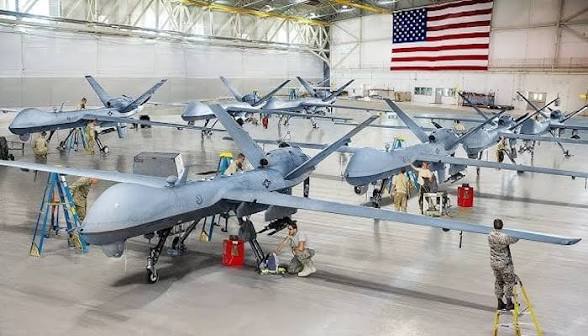
US military personnel deployed to Nigeria are operating high-end surveillance drones from an air base in Bauchi state, in a mission aimed at bolstering Nigeria’s fight against jihadist and criminal networks across the country’s troubled north.
Nigerian defence officials say the remotely piloted aircraft are being flown strictly for intelligence, surveillance and reconnaissance. The systems are capable of carrying weapons, but both governments insist they are currently limited to detecting, tracking and helping disrupt terrorist activity rather than conducting airstrikes.
About 100 US troops are in Nigeria as part of a training and advisory mission focused on counterterrorism, air operations and intelligence fusion. They are not in combat roles, according to Nigerian military spokespeople and US defence officials, who describe the deployment as a partnership designed to sharpen Nigeria’s own capabilities rather than replace them.
The deployment comes as Nigeria confronts a complex security landscape. In the northeast, Boko Haram and Islamic State West Africa Province continue to stage ambushes and raids despite years of military offensives. In the northwest and central belt, heavily armed gangs known locally as bandits carry out mass kidnappings for ransom, attack villages and target highways. Other groups are involved in cattle rustling, illegal mining and extortion.
Military analysts say the drones give Nigerian and US planners a far clearer picture of militant movements, weapons flows and camp locations across difficult terrain, from dense forests to remote border regions. The aircraft can loiter for many hours, feeding live video and other data to joint operations rooms where Nigerian officers make decisions on raids, patrols and air support.
The renewed focus on Nigeria follows the closure of a major US drone hub in neighbouring Niger, where a military junta ordered American forces to leave. With that base shuttered, security experts say Nigeria has become a more important partner for Washington’s efforts to monitor jihadist networks that span the Sahel and Lake Chad Basin.
Officials in Abuja frame the cooperation as part of a broader attempt to modernise the armed forces and restore control over vast ungoverned spaces. Human rights advocates, meanwhile, are urging both governments to ensure that any intelligence-driven operations respect civilian protections and are subject to clear oversight.