Discuss Five Tools That Are Important in Developing Dramatic Causality for Progressing Your Screenplay
Introduction
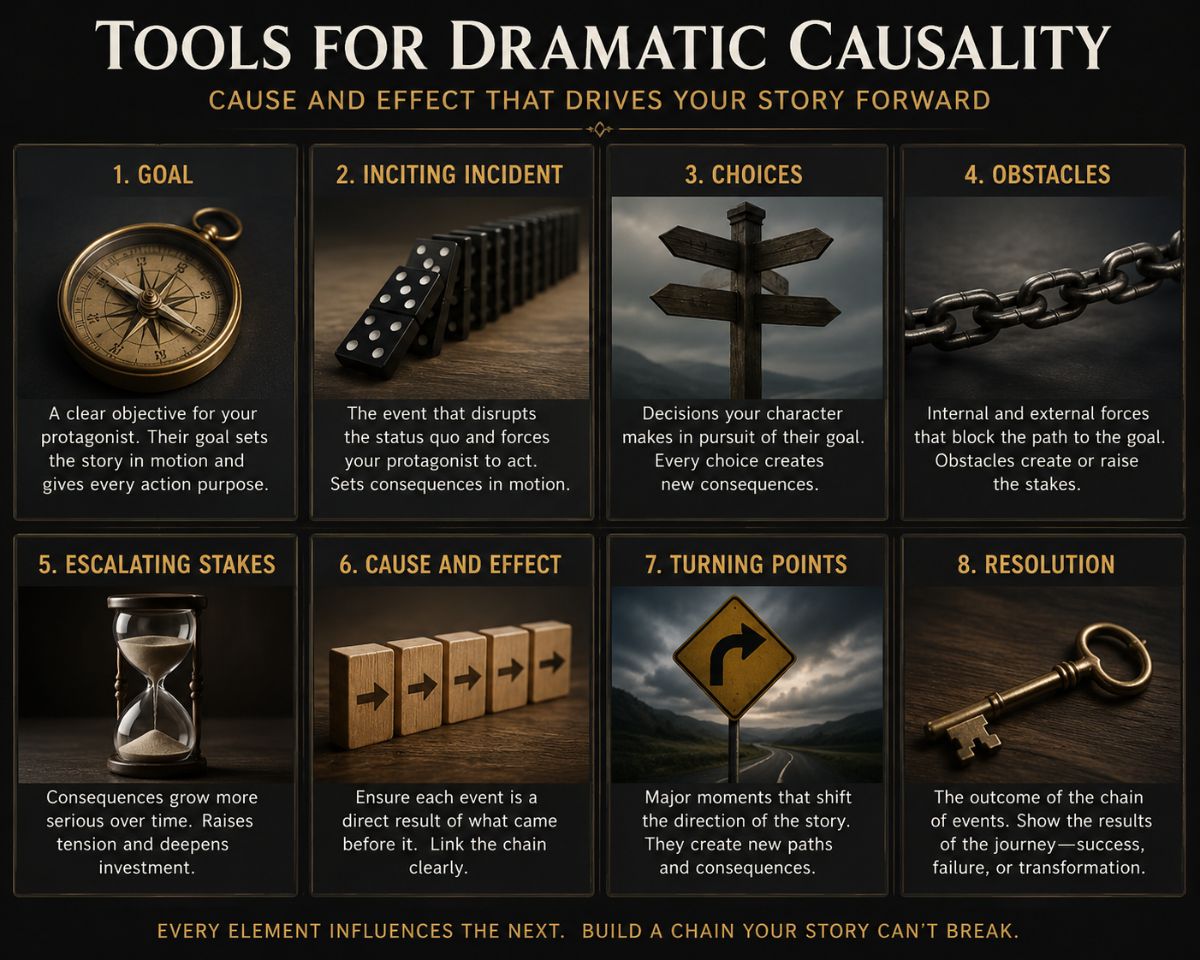
Dramatic causality is the principle of cause and effect in storytelling. It refers to the way events in a screenplay are connected, where one action leads to another, creating a logical sequence that drives the plot forward. Without dramatic causality, a screenplay may feel disconnected, confusing, or uninteresting because events appear to happen randomly. Effective screenwriters use several tools to ensure that every scene contributes to the progression of the story and maintains audience engagement.
Below are five important tools used in developing dramatic causality in a screenplay.
1. Character Motivation
Character motivation is one of the most important tools for creating dramatic causality. Every action taken by a character should be driven by a clear desire, need, fear, or goal. When characters act according to their motivations, their decisions naturally create consequences that move the story forward.
For example, if a student desperately wants academic success, she may decide to join a study group. Through that decision, she meets new people, encounters conflicts, and experiences events that shape the rest of the story. The audience understands why events occur because they are rooted in the character's choices.
Importance
Creates believable actions and reactions.
Helps audiences understand character behavior.
Generates logical cause-and-effect relationships.
Drives the plot organically.
2. Conflict
Conflict is the struggle between opposing forces within a story. It is often considered the engine of drama because it creates obstacles that characters must overcome. Conflict can be internal (within a character) or external (between characters, society, nature, or circumstances).
When conflict arises, characters are forced to make decisions. These decisions produce consequences, which then create new conflicts. This chain of events establishes dramatic causality and keeps the screenplay moving.
For instance, if two friends compete for the same scholarship, their rivalry may lead to misunderstandings, betrayal, and reconciliation. Each event is caused by the previous one.
Importance
Creates tension and suspense.
Encourages character development.
Produces actions and reactions that advance the plot.
Keeps audiences emotionally invested.
3. Goals and Objectives
A screenplay progresses effectively when characters have specific goals. Goals provide direction and purpose to the narrative. As characters pursue their objectives, they encounter challenges that generate dramatic events.
For example, a character whose goal is to find a missing sibling will investigate clues, question suspects, and travel to different locations. Every step taken toward achieving the goal creates new situations and consequences.
Clear goals help maintain narrative focus because every major scene contributes to the pursuit of an objective.
Importance
Gives the story structure and direction.
Motivates character actions.
Creates opportunities for conflict and suspense.
Connects scenes through a cause-and-effect sequence.
4. Obstacles and Complications
Obstacles are barriers that prevent characters from easily achieving their goals. Complications are unexpected developments that increase the difficulty of the situation. Together, they strengthen dramatic causality by forcing characters to respond to changing circumstances.
For example, a character trying to secure a job may face financial difficulties, competition from other applicants, or personal challenges. Each obstacle requires a response, and those responses create new events in the story.
Without obstacles, a screenplay becomes predictable because characters achieve their objectives too easily.
Importance
Increases dramatic tension.
Creates opportunities for character growth.
Produces new plot developments.
Sustains audience interest.
5. Foreshadowing and Setups
Foreshadowing involves planting hints or clues about future events, while setups introduce information, objects, or situations that become important later in the story. These techniques strengthen dramatic causality by ensuring that later events have clear foundations.
For example, if a screenplay shows a character secretly learning self-defense early in the story, the audience will understand how that character successfully protects themselves later. The earlier scene becomes the cause, while the later event becomes the effect.
This approach prevents important developments from appearing random or unrealistic.
Importance
Creates logical connections between events.
Enhances audience satisfaction.
Builds anticipation and suspense.
Makes plot developments feel earned and believable.
Conclusion
Dramatic causality is essential to effective screenwriting because it ensures that every event grows naturally from previous actions and decisions. Five important tools for developing dramatic causality are character motivation, conflict, goals and objectives, obstacles and complications, and foreshadowing/setups. These tools work together to create a coherent cause-and-effect structure that drives the screenplay forward, develops characters, and keeps audiences engaged from beginning to end.
References
Field, S. (2005). Screenplay: The Foundations of Screenwriting. Delta Books.
McKee, R. (1997). Story: Substance, Structure, Style and the Principles of Screenwriting. ReganBooks.
Trottier, D. (2014). The Screenwriter's Bible. Silman-James Press.
Seger, L. (2010). Making a Good Script Great. Samuel French.
Snyder, B. (2005). Save the Cat! The Last Book on Screenwriting You'll Ever Need. Michael Wiese Productions.
6