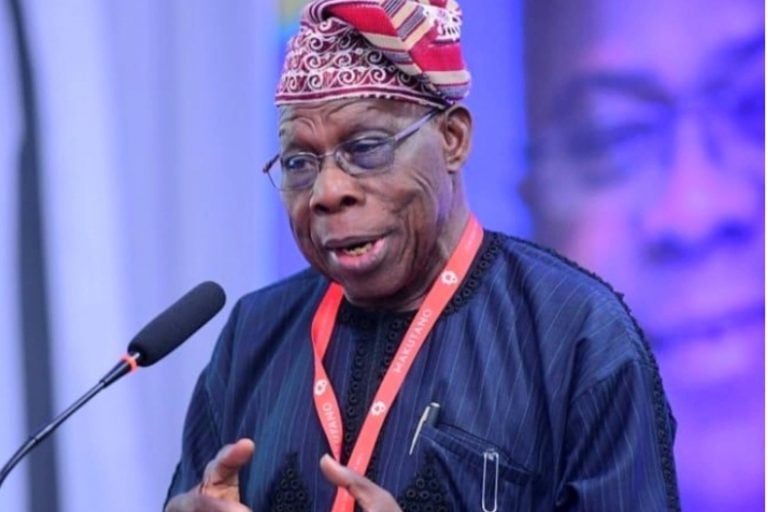
Nigerians were left stunned this week as former President Olusegun Obasanjo dropped a bombshell: he does not know his own age! The ex-leader, often hailed as a titan of African politics, admitted this surprising fact during a recent interview, throwing the internet into a frenzy and raising serious questions about Nigeria’s record-keeping – or lack thereof.
According to Obasanjo, “I don’t know my exact age but I could judge from those who were in school with me… So I leave it to you to guess what my age could be.” Rather than giving a straight answer, Obasanjo passed the burden of guessing to his audience, drawing some laughs but also sparking widespread debate.
The former president justified his uncertainty by blaming the “lack of formal record-keeping” when he was born. He claimed that, like many Nigerians of his generation, he simply compares himself to his surviving schoolmates – six of whom, he says, are all over 90. “That’s how I know my age,” Obasanjo shrugged, in what some critics are calling a shocking example of the country’s institutional weaknesses.
This headline-grabbing confession came during the much-publicized Toyin Falola Interviews, a platform supposedly known for in-depth conversations. With Obasanjo’s comments now going viral, the spotlight is once again back on Nigeria’s problems with record-keeping and the credibility of its elder statesmen.
Not one to stay out of the news, Obasanjo also used the spotlight to promote his Olusegun Obasanjo Presidential Library. He boasted about digitizing “over 3 million materials” (with another 3 million to go), describing the library as a crucial tool for Nigeria’s future. “The idea is that when these materials are digitalised, people can have access to them…” he announced, as if this will somehow solve the country’s long-standing documentation crisis.
Obasanjo even went so far as to list the personal items preserved in his library, including his school records, prison letters (to both family and the late General Sani Abacha), crop records from his time behind bars, and unpublished manuscripts. The self-promotion didn’t stop there, as he insisted that the library’s mission is to “preserve the past, take note of the present and inspire the future.”
The ex-leader did not shy away from blaming society at large, lamenting Nigeria’s “poor record-keeping” and weak institutional memory. But some critics argue it’s ironic for a former president to complain about a problem he arguably did little to fix while in office.
Despite all this, Obasanjo continues to celebrate his “birthday” every year, with lavish events and high-profile tributes.
In the end, Obasanjo’s sensational admission has exposed deep flaws in the nation’s approach to history and record-keeping. Whether this latest headline will lead to any